



In today’s fierce digital landscape, local businesses face mounting pressure to stand out — not just among global players, but among their immediate local competitors. For any brick-and-mortar business or service-area company, optimizing local search is no longer optional. The turning point? When you shift from just optimizing your own listing to strategically mining competitor insights through the power of your Google Business Profile (GBP).
Table of Contents
- Why Local SEO Still Moves the Needle
- The Role of Google Business Profile in Local Search Visibility
- Why Competitor Insights Matter – and Why Most Miss Them
- The Anatomy of a Competitor Audit via GBP
- Identifying Your True Local Competitors
- Capturing GBP-Based Data (Reviews, Attributes, Posts, Photos, Categories)
- Comparing Your GBP vs Competitors: Gap-Analysis
- Key Metrics from Google Business Profiles You Should Track
- Turning Insights into Action: Strategic Playbook
- Profile Optimization & Upgrades
- Review & Reputation Strategy
- Content/Posts Strategy
- Local Links, Citations & Signals
- Monitoring & Continuous Competitive Intelligence
- Case Studies & Example Visuals
- Common Pitfalls & How to Avoid Them
- The Future of Local SEO & GBP — What’s Next
- Summary / Checklist / Final Thoughts
- Why Local SEO Still Moves the Needle

Local SEO remains a highly effective channel for businesses with physical presence or local service areas. According to multiple studies:
- A large percentage of mobile searches have “local intent” (e.g., “near me”, “in [city]”).
- The so-called “Local Pack” (the top 3 or so local business listings on Google search & maps) captures high-intent users who are often ready to act (visit, call, book).
- Optimizing local presence isn’t just about being discoverable — it’s about converting searchers into real-world customers (foot traffic, phone calls, bookings).
Though many businesses focus heavily on website SEO, the local element (e.g., proximity, reviews, map listings) often influences results more strongly when someone is searching for a business “near me.” The difference between ranking in the local pack or not can mean thousands of dollars in revenue, especially for competitive service industries (plumbing, HVAC, auto repair, dental, restaurants).
Because of this, the margin of error is smaller. You’re not just competing against national players — you’re competing against every other business in your zip code who shows up when someone searches.
- The Role of Google Business Profile in Local Search Visibility
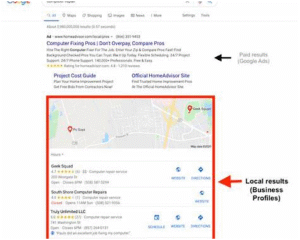
The Google Business Profile (formerly Google My Business) is the single most visible digital touchpoint for local search. Here’s why it matters:
- It appears directly on Google Search and Google Maps when people search for your business or services you offer.
- Google uses the data in your profile (business name, category, description, photos, reviews, attributes, posts) to help decide ranking in the “local pack” and map results.
- Customers often make decisions based on what they see in the profile: number of reviews, star rating, recent photos, posts, “popular times”, etc. A fully optimized profile improves conversions (clicks → calls/directions/visits).
- Because of the above two points, the GBP becomes both an SEO asset and a conversion asset — meaning doing more than just “set it up” is required.
In short: your profile is not just a listing — it is a mini-website + discovery hub, and therefore holds strategic value. Many local businesses treat it passively, but those who treat it proactively gain competitive advantage.
- Why Competitor Insights Matter – and Why Most Miss Them
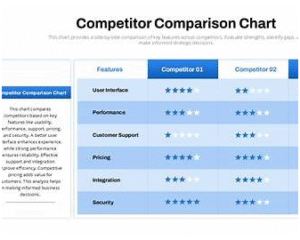

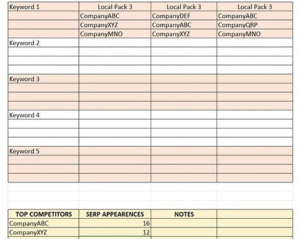
Why competitor insights matter
- Ranking locally is relative: you’re not just optimizing in a vacuum — you’re optimizing against the competition in your geographic area. As BrightLocal writes, local competitor analysis is “about identifying why your local competitors are ranking high … and then seeing how to capture those opportunities yourself.” BrightLocal+1
- Your competitors’ GBP profiles reveal what’s working — categories they choose, review volume they have, posting regularity, photos and content, keywords in descriptions, etc. These are concrete signals you can learn from and adapt.
- Competitors may also expose gaps in your strategy: you may find services/attributes they highlight that you don’t, or keywords they’re ranking for that you’re missing. That leads directly to opportunity.
Why most businesses miss this
- Many local businesses believe “just fill out my profile and I’m done”. They don’t revisit. They don’t monitor what competitors are doing.
- The GBP dashboard provides basic insights, but competitor-specific data is harder to extract unless you have systematic processes/tools.
- Local SEO requires consistent optimization (reviews, posts, photos, attributes, citations) — many don’t maintain this. Meanwhile competitors who remain active build momentum.
- Without a competitor lens, you may optimise for what you think matters rather than what actually matters in your specific market (your ZIP, your service area, your niche).
Bottom line: Treating your GBP as an independent asset misses the key opportunity: using competitor data to accelerate your local visibility. That’s the “secret weapon”.
- The Anatomy of a Competitor Audit via GBP
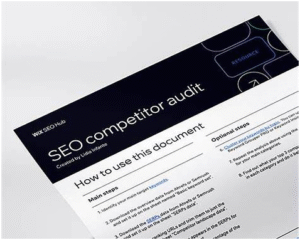
Here is a detailed workflow you can apply step-by-step.
4.1 Identifying Your True Local Competitors
It’s important to distinguish between “online competitors” and “local map pack competitors”.
- First, perform searches for your main keywords + location modifiers (e.g., “plumber Detroit”, “dental clinic near me Detroit”, etc.). See which businesses appear in the map pack and organic listings.
- Use tools (e.g., local SEO tools such as SEMrush, Ahrefs, and Local Bullseye to see businesses ranking for those queries.
- Map out direct competitors (offer the same service in the same area) and indirect competitors (offer similar services, or target overlapping keywords).
- Create a competitor list (e.g., top 5–10) for your locale.
4.2 Capturing GBP-Based Data
Once you’ve identified your competitor list, for each competitor (and your own listing) collect the following data points:
- Business Name + Address + Phone (NAP) — and check consistency.
- Categories selected in GBP (primary + secondary).
- Business description text and which keywords are used.
- Number of reviews + star rating (and recent review velocity).
- Photos: number of photos (daytime, nighttime, interior, exterior), quality, update frequency.
- Posts: whether the listing uses Google Posts (offers, events, updates), frequency of posting, engagement if visible.
- Attributes: special features (e.g., “wheelchair accessible”, “delivery”, “online appointments”), services listed, service area.
- Opening hours (regular, holiday, special hours).
- Website link, booking link (if any), menu (if relevant).
- Insights (if you have access to your own): website clicks, direction requests, phone calls, queries. For competitors you can approximate via observations.
- Prominence signals: number and quality of citations (directories), backlinks to site, social mentions (optional but helpful).
Some of these are visible externally; others require more advanced tools or manual tracking.
4.3 Comparing Your GBP vs Competitors: Gap-Analysis
Once data is collected, build comparison tables. For example:
| Metric | Your Listing | Competitor A | Competitor B | Competitor C |
| Reviews (#) | 112 | 315 | 207 | 460 |
| Star Rating | 4.2 | 4.7 | 4.5 | 4.8 |
| Primary GBP Category | “Plumber” | “Plumber” | “Emergency Plumber” | “Plumbing & Heating” |
| Posts (last 30 d) | 0 | 3 | 1 | 4 |
| Photos (# last 90 d) | 2 | 15 | 6 | 20 |
| Services listed | 5 | 10 | 8 | 12 |
| Attributes selected | 3 | 7 | 5 | 8 |
By building this matrix, you can clearly see your weaknesses and where the wins are. For instance: if all the top competitors post weekly but you haven’t posted at all — that’s a clear gap.
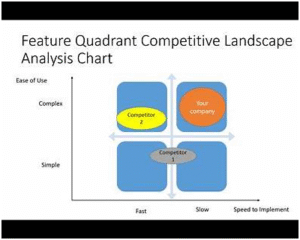
You could also visually map “competitive quadrant” style (e.g., number of reviews vs posting frequency) to spot the outliers.
4.4 Additional Analysis: Keyword/Service Gaps & Content Opportunities
Beyond pure profile metrics, dive into:
- What services or keywords competitors emphasise in their description that you don’t.
- Whether competitors mention specialisations (e.g., “24/7 emergency plumbing”, “eco-friendly HVAC”) that seem to drive differentiation.
- Whether competitors’ websites link from their GBP listing to specific service pages (e.g., service area pages) and if their service pages are optimised for local keywords.
- The review language: what do review-writers mention? Example: competitor got many reviews referencing “fast same-day service” — maybe that’s a marketing angle you can borrow.
- Citation/backlink footprint: If competitors have strong local directory presence (Chamber of Commerce, localized directories, local sponsorships) you may identify opportunities.
- Key Metrics from Google Business Profiles You Should Track
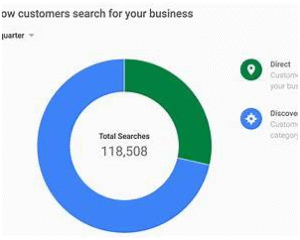
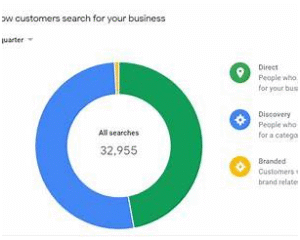
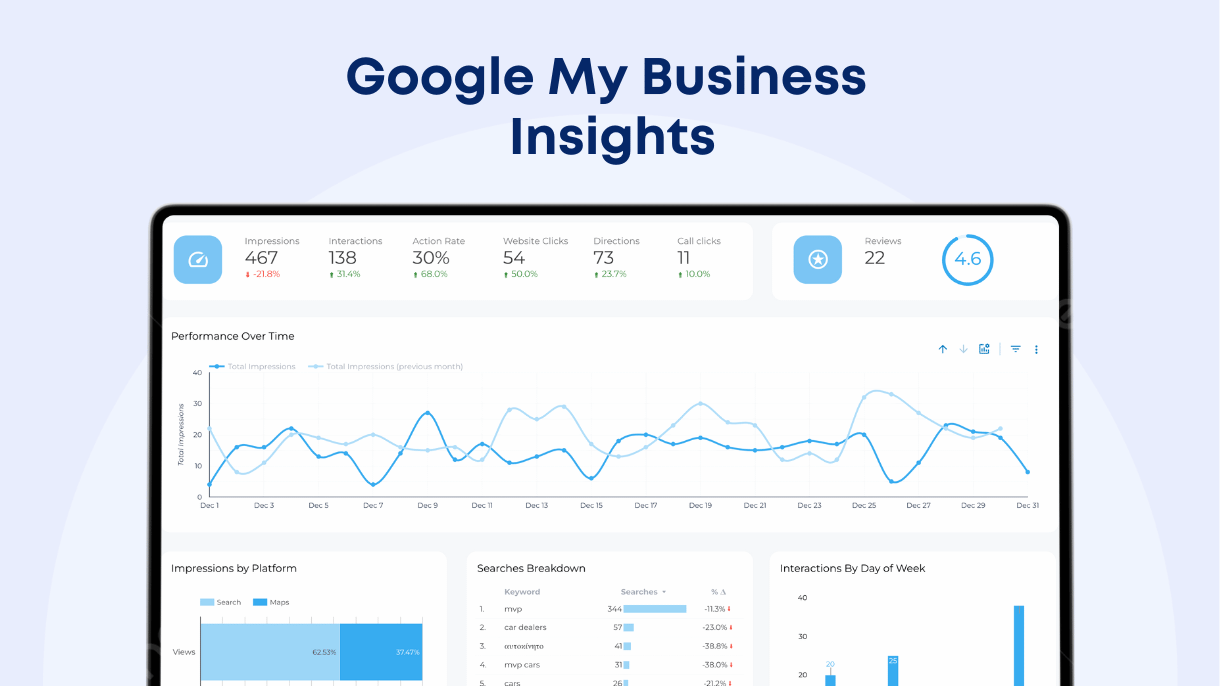
When it comes to GBP-based insights, tracking the right metrics is crucial. “Tracking and optimizing for key GBP engagement metrics like website clicks, phone calls, and direction requests ensures … businesses aren’t just seen, but chosen.”
Here are the key metrics:
- Search Queries: What keywords are being used to find your profile (e.g., “dentist Detroit”, “orthodontist near me”, branded vs non-branded).
- How Customers Find You: Direct (customers who searched your business name), Discovery (searched category or service), Branded (search for a brand like yours).
- Customer Actions: Website clicks, Phone calls, Direction requests, Message requests (if enabled).
- Views: Number of views your profile receives (Search views, Maps views).
- Photo Views & Photo Quantity: How often your photos are viewed and how many you have (profile photos, user photos).
- Reviews: Number of reviews, star rating, review velocity (how many in last 30/90 days).
- Engagement with Posts: Click-throughs on Google Posts, Offers, Events if you’re using them.
- Time/Day Patterns: When users request directions/calls (which hours/days). Useful to optimize staffing or posts/timing.
- Benchmarking Against Competitors: While Google doesn’t provide competitor data directly, you can approximate by checking competitor review counts, update frequency, visible posts, etc.
Pro tip: Export your monthly GBP Insights, track over time, and overlay competitor checkpoints quarterly. Then set targets: e.g., “increase direction requests by 20%”, “post twice weekly”, “gain 30 new reviews per month”
- Turning Insights into Action: Strategic Playbook
This is where we convert the audit, data and metrics into tactical, high-impact actions. Think of this as your “secret weapon” operations playbook.
6.1 Profile Optimization & Upgrades
- Ensure NAP (Name, Address, Phone) consistency across your GBP, website, citations and directories. Inconsistencies confuse Google and users.
- Choose the correct primary and secondary categories. Your competitors’ categories can reveal what Google is treating as relevant. If they are ranking under “Emergency Plumber” and you’re under “Plumber”, perhaps you should add that secondary category.
- Write a clear, keyword-rich but user-friendly business description — include key services, location, target audience. Extract keywords from competitor descriptions to identify what terms they emphasize.
- Add or update Services list (if applicable) in GBP. Competitors may have service items listed; this improves relevance for search queries.
- Use high-quality photos: exterior, interior, staff, finished work, before/after (if applicable). Competitors with lots of recent photos tend to rank and convert better.
- Set up Google Posts regularly: offers, events, news, service specials. If your competitor posts weekly, aim to match or exceed.
- Optimize Attributes: e.g., “Online appointments”, “Wheelchair accessible”, “Veteran-owned” — these niche attributes may help you rank for more specific queries.
- Leverage Business Hours & Holiday/Special Hours: Ensure you have corrected hours, include “special hours” for events, repairs, etc. Competitors that list “Emergency 24/7” may win for “near me now” searches.
- If you have a service-area business (SAB), ensure your service-area settings are accurate. Many ignore this.
6.2 Review & Reputation Strategy
- Reviews are huge. Star rating and number of reviews impact consumer trust and Google’s “prominence” signals.
- Monitor competitor review volume and velocity: if they add 20 reviews/month and you add 2, you’re falling behind.
- Ask for reviews from recent customers and be timely in responses. In your audit you might notice competitor responses within 24-48 hrs. — that’s a differentiator.
- Analyze what customers mention in reviews of your competitors: e.g., “Same-day service”, “friendly technician”, “clean premises”. These are themes you may want to adopt, mention in your services, or use for your marketing.
- Respond to even negative reviews promptly and professionally; according to research responsive businesses tend to rank better and build trust.
- Consider implementing a simple workflow: after job completion, send an automated “thanks for choosing us, would you mind leaving a review” email/SMS with direct GBP review link.
6.3 Content/Posts Strategy
- Use your audit to find content or service gaps: If competitors mention a service (“eco-friendly HVAC tune-up”) you don’t, that’s a content idea.
- Create hyper-local content: blog posts, service-area pages, events, case studies specific to your city/neighborhood. Then link to them from your GBP or website and feature them in posts.
- Monitor competitors’ posting cadence on GBP. If they post 2-3 times per week, plan to post at least weekly. Use varied formats, offers, events, new service announcements.
- Use keywords drawn from competitor descriptions/reviews (e.g., “24/7 emergency plumber Detroit”, “affordable family dental Detroit”) to craft posts and service descriptions.
- Leverage before/after photos or customer success stories — especially in service industries (home repair, renovation) where visual proof matters.
- Create an editorial calendar: e.g., every Monday a “Service Instagram post → GBP post → blog page” linking back.
6.4 Local Links, Citations & Signals
- While GBP is critical, you must support it with external signals: local citations (e.g., Chamber of Commerce, Yelp, local directories), backlinks from local publications, sponsorships, events.
- Use your competitor audit to identify where they are listed: are they sponsoring the local Rotary? Are they featured in local newspaper “Best of” lists? Mimic or exceed.
- Check competitors’ citation consistency: inconsistencies may provide an opportunity for you to outrank them by being more accurate and numerous.
- Participate in local event pages, get featured in local press, join relevant associations — these build “prominence” which Google uses for local ranking.
6.5 Monitoring & Continuous Competitive Intelligence
- Set a quarterly review to revisit your competitors’ GBP profiles. Update your audit spreadsheet: new review counts, new categories, changes to description, photo counts, posting frequency.
- Use tools or manual checks to watch for new entrants in your local pack (competition).
- Track your direction requests, phone calls, website clicks month over month (from your GBP Insights). Compare with competitor changes: if they increase review velocity and you see a competitor leap in pack ranking, you know review volume is likely a factor.
- Create alerts for competitor changes (e.g., new services added, offering seasonal promo).
- Adapt your strategy accordingly: perhaps you see a competitor changed category to “Eco Friendly Plumbers” and that area is underserved — you might respond by adding “sustainable plumbing solutions” as a service.
- Case Studies & Example Visuals
Let’s walk through a few hypothetical but realistic use cases to illustrate how competitor-based GBP intelligence can be deployed.
Case Study A: Family Dental Clinic in Detroit
Scenario: Two-location dental clinic in Detroit wants to improve its ranking among three strong local competitors.
Audit findings:
- Competitor A has 450 reviews (4.8★) and posts weekly about “kids-friendly Saturday appointments”.
- Competitor B lists the GBP category “Cosmetic Dentist” in addition to “Dentist”, and has service items like “Invisalign® free consultation”.
- Competitor C has many recent exterior/interior photos (50 new photos this quarter), while our clinic only has 10.
- Our clinic’s posting frequency: zero. Service list limited. Website link in GBP simply goes to homepage (no specific landing pages).
Action plan based on insights:
- Update our GBP to include primary category “Dentist” + secondary “Cosmetic Dentist”.
- Write a business description that emphasises “family-friendly dentists in Detroit, Saturday & evening hours, Invisalign and implants”.
- Add service items: “Invisalign®”, “Dental implants”, “Emergency same-day dental”.
- Implement weekly GBP posts: Monday: “Meet our Saturday team”, Wednesday: “Patient story: Kids’ first dental visit”, Friday: “Weekend emergency? Call us now”.
- Increase photo uploads: interior, staff, kids treatment room, before/after case. Set target: 15 new photos/month.
- Review strategy: send review link after every appointment, ask for “what was your favourite part of your visit?” to cultivate rich language (which may echo keywords like “friendly staff”, “Saturday”, “kids”).
- Monitor next quarter: Track review count, posting frequency, new service listing, then check ranking change in the local pack via “dentist Detroit”.
Case Study B: HVAC Service Area Business
Scenario: HVAC repair company in suburban area competing with 5 other businesses within 20 miles.
Audit findings:
- Top competitor lists “24/7 Emergency HVAC” attribute, many reviews referencing “came out at midnight”.
- That competitor posts monthly promotions (“$99 winter tune-up”) via GBP.
- Others rarely post. Our business has 200 reviews (4.3★) but most are old (pre-2022).
- Our competitor has service area radius that covers more ZIP codes; ours only lists one.
- Photo counts: ours = 20, theirs = 150+ (including job-site pics).
Action plan:
- Add “24/7 Emergency HVAC” service/attribute if applicable.
- Launch monthly promotions via Google Posts: e.g., “Winter is coming: $99 tune-up before Nov 30 — call now”.
- Harvest recent reviews: ask customers after service for recent feedback; target 50 new reviews in 90 days.
- Expand service-area listing in GBP (within reason) to cover more ZIPs.
- Increase photo volume: job-site teams, before/after, winter-ready systems, friendly techs.
- Create a landing page on the website for “Emergency HVAC repair [city]” and link from GBP.
- Monitor metrics: direction requests, phone calls (from GBP), map pack ranking for “HVAC repair [city]”, “emergency HVAC [city]”.
- Common Pitfalls & How to Avoid Them
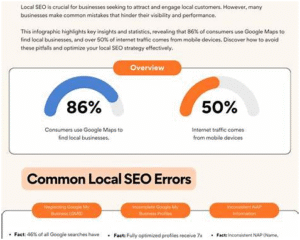
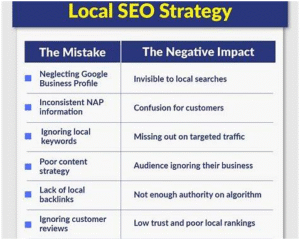
Even well-meaning local businesses falter when they ignore competitor intelligence or mis-manage their GBP. Here are common pitfalls:
- Incomplete GBP profile: Missing category, missing services, no posts, few photos. Without competitor insights you may not realize how far behind you are.
- Ignoring reviews: Letting review numbers stagnate or ignoring negative reviews hurts both trust and ranking.
- Wrong categories/attributes: Using only broad categories (“Home services”) rather than precise ones (“Emergency plumbing”, “Drain cleaning”) loses relevance signals to Google.
- Duplicate listings: Sometimes businesses inadvertently create multiple GBP listings (for multiple addresses or service areas) — this confuses Google and splits review/engagement signals.
- Zero monitoring of competitors: If you don’t track what they’re doing (new services, new posting), you risk being reactive rather than proactive.
- Inconsistent NAP/citations: Even if your GBP is perfect, if your name/address/phone differ across directories it weakens your prominence.
- Assuming one-time setup will hold: Local SEO is not “set and forget”. Many businesses stagnate because they don’t adapt as competitors improve.
Avoid these by integrating the competitor audit and monitoring steps into your regular process.
- The Future of Local SEO & GBP — What’s Next

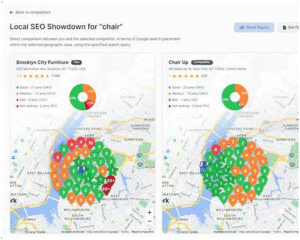
The local SEO landscape continues evolving. Here are trends to watch — and how competitor insights via GBP can help you stay ahead.
- AI and machine-learning in local search: Google increasingly uses behavioral signals (clicks, calls, dwell time, photo views) plus competitor patterns to decide rankings. Businesses that monitor competitor activity can identify emerging tactics and adapt faster.
- Voice & “near me” searches: As voice search grows (e.g., “OK Google, find a dentist near me now”), competition intensifies. Tracking competitor keywords in their GBP descriptions (e.g., “near me”, “24/7”, “open now”) helps you align.
- Video/virtual tours/photos dominance: Competitors uploading rich media (videos, 360° tours) may gain a visibility edge. If your audit shows they have far more media, you can respond accordingly.
- Multi-location & service area businesses scaling: Brands that optimize each location’s GBP with hyper-local content and competitor tracking will dominate local pack real estate.
- Integration with other Google products: E.g., Google Business Profile linking to performance metrics, bookings, messaging, product catalogs. Competitor audit may show who is using these advanced features (e.g., booking links, product listings) and thus what to implement.
By constantly monitoring competitors via your GBP audit and adapting, you’re not just keeping up — you’re staying ahead.
- Summary / Checklist / Final Thoughts
Let’s wrap up with a summary checklist and final strategic thoughts:
✅ Summary Checklist
- Identify your top 5–10 local competitors (map pack + organic results)
- Create an audit spreadsheet: capture GBP metrics (reviews, categories, photos, posts, attributes) for you + competitors
- Compare and identify gaps: where do competitors outperform you?
- Update your GBP: categories, services, description, attributes, photos, reviews plan
- Implement regular posting via GBP (e.g., weekly) with keyword-rich content
- Launch or refine review generation and response workflow
- Build out local citations/backlinks inspired by competitor signals
- Monitor and track metrics monthly: view counts, phone calls, direction requests, post engagements
- Re-audit competitors quarterly: what changed? adapt your strategy.
- Stay informed about local SEO trends (voice search, AI, new GBP features) and adjust accordingly.
When you treat your Google Business Profile as merely a listing, you are leaving points on the table. But when you dive into what your competitors are doing in their GBP profiles, you unlock a strategic vantage point. You see what tactics are working, what signals Google seems to reward in your locale, and where you have opportunities to differentiate.
In essence, competitor insights via GBP become your secret weapon for local SEO.
- You shift from “optimize me” to “optimize to beat them”.
- You don’t wait for Google to tell you why you’re ranked lower — you go find the answer yourself by looking at competitor profiles.
- You become proactive, data-driven, and focused on strategic gaps rather than generic “optimize profile” guidance.
If you implement this approach with discipline — audit, action, monitor, adapt — your local SEO efforts won’t just keep up — they’ll outpace your competition.