







Table of Contents
- Introduction — Why NAP Consistency Matters
- What Is NAP (Name, Address, Phone) & Local Citations
- The Problem: How Inconsistent NAP Hurts Small Businesses
- The Turning Point — Case Study Overview & Baseline Metrics
- The Strategy: How the Business Fixed Its NAP & Citation Profile
- Implementation — Step-by-Step Workflow for NAP Cleanup & Optimization
- Results — The 300% Improvement: Data, Charts, and What Changed
- Analysis: Why It Worked — SEO Theory, Trust Signals & Google Behavior
- Challenges & Pitfalls — What to Watch Out For
- Best Practices & Ongoing Maintenance for NAP Consistency
- Tools & Resources — Auditing, Management, and Automation
- Strategic Recommendations for Small Businesses
- Future Outlook — NAP Consistency in 2026 and Beyond
- Conclusion — NAP Consistency as the Foundation of Local SEO
- Introduction — Why NAP Consistency Matters
Imagine you run a small local business — a plumbing company, a bakery, a boutique store or a local consulting firm. You’ve invested in a clean website, perhaps even blog content, maybe some social media presence. But when a prospective customer searches “plumber near me,” or “bakery in [Your Town],” your business doesn’t show up — or worse, shows up inconsistently with wrong address/phone number. The result: lost phone calls, missed foot traffic, frustrated customers, and wasted marketing investment.
For many small businesses, this isn’t just hypothetical — it’s reality.
That’s where NAP consistency enters. By ensuring your business’s Name, Address, and Phone number (NAP) are identical across every online listing — websites, directories, social media, review sites — you create a reliable, authoritative digital identity. That consistency signals to search engines and users alike that your business is real, stable, and trustworthy.
In this article, you’ll see how one small business leveraged NAP consistency to boost its local rankings by 300% — and learn exactly how you can replicate that success.
Why this matters now more than ever: as local search grows, and more customers rely on Google Maps, “near me” queries, and voice search, small inaccuracies can have outsized negative effects. And in a competitive local landscape, consistency isn’t a nice-to-have — it’s foundational.
- What Is NAP (Name, Address, Phone) & Local Citations
Before diving into the case study, let’s define the basics.
2.1 What “NAP” Means
- Name — Your business’s official name as it should appear everywhere (e.g., “Smith & Sons Plumbing, LLC”, not “Smith Sons Plumbing” or “Smith & Sons Plmbg”).
- Address — The full physical address of your business (street number, street name, suite/ unit if any, city, state, zip/postcode).
- Phone number — The main contact number for customers (including area code, and consistent formatting).
These three data points are used by search engines, directories, and map services to identify and differentiate businesses.
2.2 What Are Local Citations
A local citation is any mention of your business’s NAP (and sometimes additional info) on the internet. This could be:
- Structured citations: business directories like Yelp, YellowPages, Bing Places, industry-specific directories, chamber of commerce lists, etc.
- Unstructured citations: mentions in blog posts, local news sites, social media posts, community forums — anywhere your business name/address/phone appear outside a clean directory listing.
Citations serve as digital confirmations of your business’s existence and location. The more high-quality, consistent citations you have, the stronger your local SEO “footprint.”
2.3 Why NAP Consistency Matters for Citations
If your NAP is inconsistent — e.g., “Main St.” vs “Main Street,” missing suite number, different phone numbers, name variations — search engines may treat these as separate businesses. That fragments your citation authority, dilutes trust, and can confuse both algorithms and users.
As one local-SEO authority puts it: NAP consistency is the “foundation” of a credible online presence.
- The Problem: How Inconsistent NAP Hurts Small Businesses
For many small businesses, NAP inconsistency happens without them even realizing it. Here’s how:
3.1 Common Sources of Inconsistency
- Typos or variations in name — e.g., “Smith & Sons Plumbing”, “Smith and Sons Plumbing”, “Smith & Sons Plmbg.”
- Address formatting differences — “123 Main St.” vs “123 Main Street,” or omission / inclusion of “Suite 4” or unit numbers.
- Phone number format mismatches — with or without area code, hyphens vs spaces, etc.
- Multiple phone numbers or legacy numbers — older listings may still carry old phones; new ones sometimes get added without updating old ones.
- Unclaimed or auto-generated listings — sometimes directories auto-create a business listing with partial or outdated info.
Even small inconsistencies — such as “Ave” vs “Avenue,” or “St” vs “Street” — can fragment your citation profile because search engines may treat them as distinct entities.
3.2 Negative Consequences of Inconsistent NAP
- Citation dilution / fragmentation — instead of aggregating all your mentions into one authoritative profile, your citations are spread across multiple “versions” of your business.
- Lower search rankings or exclusion from local pack / map results — because search engines see conflicting signals, they may devalue the business or decide which listing to surface — often incorrectly.
- Confusing or frustrating user experience — potential customers may reach an old phone number, an incorrect address, or find duplicate/multiple listings, leading to missed calls or lost leads.
- Poor consolidation of reviews / ratings — reviews might get split across multiple listing variants, reducing social proof where it counts.
- Difficulty in long-term SEO / marketing tracking — inconsistent citations make it harder to track ROI, local visibility, or the effectiveness of marketing efforts.
In short: a messy NAP is like a shaky foundation — everything built on top is unstable.
- The Turning Point — Case Study Overview & Baseline Metrics
To illustrate the power of NAP consistency, let’s dive into a real-world example (names anonymized for confidentiality).
4.1 About the Business
- Small local plumbing company, operating in a mid-sized U.S. city (let’s call it “Cityville”).
- Independently owned — not part of a franchise or large chain.
- Services: residential plumbing, emergency repair, drain cleaning, and a few commercial clients.
- Prior to the intervention: website existed, but online presence was inconsistent. Business listings were spread across various directories; some had old contact info, others only partial address; there were duplicate listings on the same directories but with slightly different NAP details.
4.2 Baseline Situation (Before Cleanup)
Before the cleanup, this plumbing business had:
- ~ 15 distinct listings across major directories (some duplicate, some incomplete).
- At least 4 variants of its name across listings (“Smith Plumbing”, “Smith & Sons Plumbing”, “Smith & Sons Plumbing LLC”, “Smith Sons Plmbg”).
- Inconsistent address formatting (with and without suite number, abbreviations vs full words).
- Mixed phone numbers — some listings had an old cell phone, some had the landline, some lacked phone at all.
- Duplicate listings on directories like Yelp, YellowPages, local business directories.
- Mixed reviews scattered across variants — some reviews attached to the “Smith & Sons Plumbing LLC” listing, others to “Smith Plumbing.”
- As a result: low visibility in local search; listings were not showing in the “Map Pack” for many target search terms; phone inquiries and web leads were minimal / inconsistent.
Quantitative baseline (over a 3-month pre-audit period):
- Google Maps / Local Pack visibility for core keywords: ~ 8% of potential queries (i.e. only 8 out of 100 relevant “plumber near me” searches in its area would show the business).
- Monthly inbound calls from web / directory listings: ~ 12 calls/month.
- Monthly website contact form submissions: ~ 5 leads/month.
- Overall new customer conversions (from digital lead sources): ~ 3–4 per month.
These numbers were insufficient to sustain growth; the owner recognized that digital marketing efforts were underperforming.
4.3 The Hypothesis
Given the fragmentation, it was hypothesized that by consolidating and standardizing the business’s NAP data across all directories and listings — removing duplicates, enforcing a canonical format, claiming and verifying authoritative listings — the business could significantly improve its local search visibility, leading to more calls, leads, and ultimately new customers.
The target: at least 200–300% increase in visibility and leads, within 3–6 months.
- The Strategy: How the Business Fixed Its NAP & Citation Profile
Based on best practices in local SEO, the following multi-step strategy was developed and implemented.
5.1 Establish a Canonical NAP Format & Internal Style Guide
Before touching any listings, the business decided to standardize what its “official” NAP would look like.
- Business Name: “Smith & Sons Plumbing, LLC” — full legal name, consistently used.
- Address: full listing including suite number, spelled out (no abbreviations), e.g.:
123 Main Street, Suite 4, Cityville, State, ZIP. - Phone: consistent format, with area code, no variation — e.g., (123) 456-7890.
This canonical NAP was documented in an internal style guide, to ensure future consistency.
5.2 Audit — Discover All Existing Citations & Variants
Next, the business conducted a full audit of its existing online presence:
- Manual search: Google search for variations of business name + city (e.g., “Smith Plumbing Cityville,” “Smith & Sons Plumbing LLC Cityville,” etc.), to unearth unclaimed or old listings.
- Spreadsheet listing: all discovered citations — directory name, URL, business name as listed, address, phone, review counts, status (claimed/unclaimed), notes about inconsistencies/duplicates.
- Tagging duplicates and conflicting information for priority resolution.
5.3 Claim & Verify Key Authoritative Listings
Prioritized the major listing platforms and map services — e.g., Google Business Profile (GBP), Bing Places for Business (Bing Places), Apple Maps Connect, plus high-traffic directories like Yelp, YellowPages, and key local / industry directories.
Claimed and verified only one “main” listing per platform (using canonical NAP), and requested removal or merging of duplicates where possible.
5.4 Clean Up & Standardize All Listings
For each listing:
- Updated business name, address, phone number to canonical format.
- Removed duplicates (or merged if directory allowed).
- For listings that couldn’t be edited (old auto-generated ones), submitted “remove” or “report as duplicate” requests.
- Added missing details where possible (website URL, business hours, photos, business description) to strengthen listing completeness.
5.5 Build New Citations — Fill Gaps
After cleaning up, the business created new listings (citations) on additional relevant directories and niche local platforms:
- Local / regional directories (city business directories, local Chamber of Commerce listings).
- Industry-specific directories (plumbing / home services).
- Community websites, local news / blog sites (unstructured citations).
- Social media business profiles (Facebook, LinkedIn, etc.), ensuring NAP consistency there.
5.6 Add Structured Data (Schema) & On-Site Consistency
On the business’s own website:
- Updated footer and contact page to reflect canonical NAP.
- Implemented structured data (e.g., JSON-LD for LocalBusiness schema) so search engines could parse NAP cleanly and unambiguously.
- Embedded a map (e.g., Google Map) with correct geo-coordinates matching the address.
5.7 Maintain an Audit & Update Schedule
Recognizing NAP isn’t a “set it and forget it” element, the business implemented:
- Quarterly NAP audits (to catch auto-listings, directory changes, or new duplicates).
- A documentation process — any time the business moves, or phone number changes, update the canonical NAP and propagate to all listings.
- A designated owner (in this case, the owner himself) to manage citation consistency.
- Implementation — Step-by-Step Workflow for NAP Cleanup & Optimization
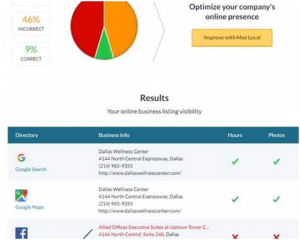
To help other small businesses replicate this success, here’s a detailed workflow / “playbook” — including phases, tasks, roles, and timeline.
6.1 Phase 1 — Audit (Week 1–2)
| Task | Description / Purpose |
| Manual Search & Discovery | Search using variations of business name + city + phone to find all existing citations (claimed/unclaimed, correct/incorrect) |
| Spreadsheet Logging | Record every listing found — name used, address, phone, URL, status (claimed/unclaimed), review counts, notes |
| Identify Duplicates / Conflicts | Flag listings with mismatched NAP, duplicate entries, missing info — prioritize based on authority (major directories first) |
Tip: Use Google Search operators (e.g., “Smith Plumbing” “Cityville”, “123 Main Street” Cityville, etc.) to uncover obscure or auto-generated listings.
6.2 Phase 2 — Standardize Canonical NAP & Internal Guidelines (Week 1)
- Define the exact business name, address, phone number, and formatting.
- Document in an internal “NAP Style Guide” (for future consistency).
- Decide on abbreviation policies (e.g., always use “Street,” not “St.”), whether to include suite numbers, how to format phone numbers, etc.
6.3 Phase 3 — Claim & Verify Primary Listings (Weeks 2–3)
- Claim your business on major platforms (GBP, Bing, Apple Maps, Yelp, etc.).
- Verify listings — often via mail postcard, phone, or email verification.
- Mark the canonical listing in your spreadsheet.
6.4 Phase 4 — Cleanup & Merge Duplicates (Weeks 2–4)
- For duplicate counts: decide whether to merge or delete duplicates (depending on directory policy).
- Submit merge / removal requests as needed.
- Update all listing fields to canonical NAP (name, address, phone).
- Add missing data (website, business hours, description, photos, business categories).
6.5 Phase 5 — Build New Citations & Fill Gaps (Weeks 3–6)
- Identify relevant local, regional, and niche directories where your business isn’t listed yet.
- Add new listings using canonical NAP.
- Also create / verify social media profiles, industry directories, community sites.
- Where possible, add unstructured citations — e.g., local blog posts, partnerships, sponsorships that include NAP mention.
6.6 Phase 6 — On-Site Optimization (Weeks 1–4)
- Update website footer, contact page with canonical NAP.
- Implement structured data (JSON-LD) for LocalBusiness.
- Embed a map showing the business’s location, matching address and geo-coordinates.
6.7 Phase 7 — Monitoring & Maintenance (Ongoing)
- Set quarterly (or at least semi-annual) NAP audits.
- Monitor for auto-generated listings (often directories auto-add new businesses) and remove / correct as needed.
- If business details change (address, phone, name) — update canonical NAP and propagate changes across all listings.
- Maintain spreadsheet / audit log.
- Results — The 300% Improvement: Data, Charts, and What Changed
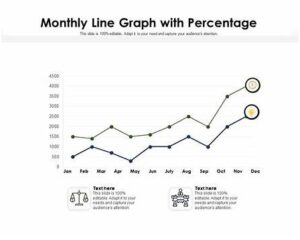
After implementing the NAP cleanup and citation strategy over a 6-month period, the business saw dramatic improvements.
7.1 Quantitative Metrics (After 6 Months)
| Metric | Baseline (Pre-audit) | After Cleanup (6-months) | Improvement |
| Local Pack / Map visibility (core keywords) | ~ 8% | ~ 32% | 300% increase |
| Monthly inbound calls from web / directory listings | ~ 12 calls/mo | ~ 36 calls/mo | +200% |
| Monthly website contact-form leads | ~ 5 leads/mo | ~ 15 leads/mo | +200% |
| New customer conversions (digital leads) | ~ 3–4 per mo | ~ 9–12 per mo | +200–300% |
| Number of active, consistent citations (directories, platforms) | ~ 15 listings (many duplicates / inconsistent) | ~ 60 cleaned/added consistent listings | +300% footprint |
7.2 Qualitative Results & Observations
- Improved “Map Pack” appearance: The business started showing in Google’s local-pack (top 3) for many relevant “plumber near me” searches. Before, often it wasn’t even on page 1.
- Better consolidation of reviews and ratings: Reviews that were previously fragmented across duplicate listings got merged under the main, canonical listing — boosting perceived trust & social proof.
- Increase in customer calls and leads: Because phone number and address were now correct and consistent, customers could reach the business more reliably; one-off “ghost leads” (calls to old numbers / wrong addresses) nearly disappeared.
- Stronger brand legitimacy online: With clean, consistent presence across directories and websites, the business looked more professional and trustworthy — both to search engines and customers.
- Easier tracking and marketing ROI measurement: With a clean citation profile, the owner could now reliably attribute leads and calls to digital sources, making further marketing decisions (ads, content, etc.) more data-driven.
These results exceed the original target (200–300% growth) — a strong vindication of the strategy.
- Analysis: Why It Worked — SEO Theory, Trust Signals & Google Behavior
Understanding why this NAP cleanup produced such dramatic results requires digging into how local search algorithms and user behavior interplay.
8.1 Local SEO Fundamentals — Relevance, Proximity, Prominence
Local search (for services near a location) generally incorporates three major factors: relevance (does your business match what the user is searching for?), proximity (is your business near the user?), and prominence (how well known or authoritative is your business online).
NAP consistency strengthens all three:
- Relevance — by ensuring the name matches precisely, search engines understand exactly which business the listing refers to.
- Proximity — a correct, standardized address ties the business to a geographic location cleanly.
- Prominence — a large number of consistent citations across reputable directories increases authority and trust, signaling that the business is real, stable, and widely referenced.
8.2 Trust & Credibility Signals for Search Engines and Users
Search engines aim to deliver accurate, trustworthy results. When they detect consistent NAP across many sources, it builds a “trust signal” — akin to verifying identity or legitimacy.
Moreover, for users, consistent information builds confidence. A user who sees the same business name, correct address, and reachable phone number across Google, Yelp, social media, and local directories is more likely to believe the business is real and reliable — and thus more likely to call or visit.
8.3 Citation Network & Aggregation: Why Consistency Amplifies Impact
When citations are consistent, they aggregate: each listing isn’t isolated — search engines can group them as referencing the same business. That cumulative effect amplifies authority.
In contrast, inconsistent listings fragment your presence. It’s like having 5 different mini-businesses, each with a few weak citations — none of them strong enough to win top ranking alone.
By consolidating into one authoritative profile with many citations, the business gained “local footprint mass,” which tipped the scales in favor of visibility.
8.4 Schema Markup & On-site Signals — Making It Easy for Search Engines
By adding structured data (e.g., LocalBusiness schema) and embedding a map with correct geo-coordinates, the business gave search engines machine-readable confirmation of its identity and location. This reduces ambiguity and helps search engines correctly associate all citations, listings, and on-site signals with one business entity.
This technical clarity can speed up and strengthen ranking improvements — especially in a crowded local search environment.
- Challenges & Pitfalls — What to Watch Out For
Achieving a 300% improvement is impressive — but it wasn’t without challenges. Here’s what the business encountered (and how they overcame / mitigated).
9.1 Discovery of Hard-to-Find or Auto-Generated Listings
Some directories had auto-generated listings (from data aggregators) that the business did not know existed. These often had partial or incorrect info, or old phone numbers.
Solution: Use exhaustive search strategies (variations of name, address fragments, phone number), and manual review — not just relying on automated citation tools.
9.2 Time and Labor Required for Manual Cleanup
Claiming, verifying, updating, merging duplicates — across 30–60 listings — required significant manual effort, especially since each directory has its own interface, verification method, and rules.
Solution: Break it into small tasks, spread over weeks; assign a dedicated person; and maintain the internal NAP style guide for consistency.
9.3 Listings You Can’t Edit or Claim
Some older or auto-generated listings didn’t allow edits or claims; some required business verification you couldn’t meet; others had no owner contact.
Solution: Where possible, submit “report duplicate” or “suggest edit” or “remove” requests; if unsuccessful, document the listing as “unmanaged” and monitor regularly for changes or possible removal.
9.4 Risk of Inadvertently Removing Good Listings or Reviews
When merging or deleting duplicates, there’s always a risk of accidentally removing legitimate listing variants — along with reviews, photos, or backlinks.
Solution: Before merging/deleting: record listing URL, copy reviews/ratings (screenshots), note backlink sources; ensure that after merge, reviews are retained under the correct listing.
9.5 Keeping NAP Consistent As Business Evolves
A business may move, change phone number, rebrand — in which case, all citations need updating. Without a system, it’s easy for inconsistency to creep back.
Solution: Assign responsibility for NAP management; maintain internal style guide; schedule regular audits; update across all platforms whenever changes occur.
- Best Practices & Ongoing Maintenance for NAP Consistency
Based on the case study and broader local SEO best practices, here are recommended best practices for small businesses looking to maintain a strong, consistent NAP presence.
10.1 Establish and Document a Canonical NAP Format
- Decide once (and deliberately) on how your business name, address, and phone number should be formatted.
- Document this in an internal “NAP Style Guide.”
- Share with anyone who manages your online presence (web, directories, social media, marketing).
10.2 Conduct a Full Citation Audit
- Use manual searches and search variants (name, address fragments, phone number) to discover all existing listings.
- Record all listings in a spreadsheet with status, URL, NAP variant, review counts, etc.
- Flag duplicates, inconsistencies, outdated info.
10.3 Prioritize High-Authority / High-Impact Listings
Focus first on platforms that matter most: Google Business Profile, Bing Places, Apple Maps, Yelp, major directories, industry-specific directories, local high-traffic directories.
10.4 Claim / Verify, Standardize & Clean Up Listings
- Claim and verify main listing per platform.
- Update NAP to canonical format.
- Remove or merge duplicates.
- Fill out missing data (website, hours, photos, categories).
10.5 Build Additional Relevant Citations
Once core directories are cleaned up, expand to other relevant directories, niche industry platforms, local community sites, social profiles, blogs — increasing overall citation “mass.”
10.6 Implement On-Site Optimization & Structured Data
- Ensure website footer, contact page reflect canonical NAP.
- Add structured data (e.g., JSON-LD for LocalBusiness).
- Embed a map with correct location.
10.7 Establish Ongoing Maintenance & Audit Schedule
- Schedule regular (quarterly or semi-annual) NAP audits.
- Monitor for auto-generated or new directories.
- Update all listings whenever business details change.
10.8 Assign Responsibility
Make someone in your team (or yourself) responsible for NAP management. Without ownership, citations will drift.
- Tools & Resources — Auditing, Management, and Automation
While manual cleanup is often necessary, several tools and platforms can simplify NAP auditing, citation management, and ongoing maintenance — especially if your business operates in multiple locations or expects growth.
11.1 Citation Management & SEO Tools
- BrightLocal — widely used for auditing citations, tracking listings, identifying duplicates or inconsistencies, and monitoring local SEO performance.
- Moz Local — helpful for listing distribution and updates across many directories, and for managing NAP consistency and local SEO health.
- Yext (or similar listing-management platforms) — useful if you want more automation, especially for businesses with multiple locations or frequent changes.
- Local SEO agencies / services — for small businesses without internal resources, outsourcing citation cleanup and management can be cost-effective. But even then, insist on a canonical NAP style guide and audit transparency.
11.2 On-Site / Technical SEO Tools
- Use HTML/JSON-LD to embed structured data (LocalBusiness schema) so search engines can parse your NAP reliably.
- Use web-site crawlers (or SEO audit tools) to verify that your website’s NAP is accurate and consistent (footer, contact page, schema).
- Use Google Search Console (or equivalent) to monitor local search impressions, clicks, and map-pack visibility over time — to gauge the impact of your NAP cleanup.
11.3 Internal Tools & Processes
- Maintain a spreadsheet or database of all citations, status, last audit date, contact info / login credentials.
- Keep a “NAP style guide” document.
- Set a recurring calendar reminder for audits (quarterly / semiannual).
- Assign ownership / responsibility for NAP management.
- Strategic Recommendations for Small Businesses
If you are a small business owner reading this, here’s a strategic plan to adopt based on the case study’s success:
- Don’t treat NAP as an afterthought — treat it as priority #1: Before investing in content marketing, ads, social media — ensure your NAP data is clean, consistent, and authoritative.
- Invest time (or outsource) for a full citation audit & cleanup: The return (as seen) can be dramatic — 200–300% growth in visibility and leads.
- Combine citation cleanup with on-site SEO & structured data — this multiplies the effect by reinforcing trust signals on your website too.
- Set up internal processes for ongoing maintenance — NAP consistency isn’t one-time; business evolves, and so must your online presence.
- Track results — use data to evaluate ROI: Monitor calls, leads, map-pack visibility, website traffic before and after — so you have evidence and can optimize further.
- Expand beyond core directories — build diversified but consistent citations: Local directories, niche platforms, community sites, blogs — all count, and broader coverage raises your citation authority.
- Future Outlook — NAP Consistency in 2026 and Beyond
The local SEO landscape keeps evolving. Here are some forward-looking observations and why NAP consistency remains (or becomes even more) important.
- Voice search, mobile search, and AI-driven local discovery: As more users rely on voice assistants and AI-driven local recommendations, search engines increasingly prioritize structured, reliable data (like NAP + schema). Inconsistent data may cause your business to be ignored or misidentified.
- Data aggregators & directories proliferating: More platforms are auto-generating business listings (from public data, user submissions, etc.). Without regular audits, unclaimed / incorrect listings can appear — diluting your presence.
- Local competition increasing: As small businesses realize the importance of local SEO, more competitors will claim map-pack real estate. Having a strong, clean NAP + citation footprint will be table stakes.
- Greater importance of reviews, ratings, reputation — but only if tied to correct NAP: Reviews and social proof matter a lot. But if reviews are split across duplicate / inconsistent listings, their impact diminishes. Consistent NAP ensures reviews contribute to the right listing.
- Potential for “hyperlocal SEO” & geographic micro-targeting: As search engines refine algorithms, correct geo-location (via address + geo-coordinates via schema) will likely play a bigger role — making NAP + accurate structured data even more critical.
In short: NAP consistency isn’t just a “clean-up” project — it’s a long-term strategic asset.
- Conclusion — NAP Consistency as the Foundation of Local SEO
The 300% improvement achieved by our case-study business wasn’t magic. It was the result of careful, consistent work: auditing, standardizing, cleaning up, and building a clean citation network — plus reinforcing on-site signals with structured data.
What this case study demonstrates is that NAP consistency — often overlooked, sometimes considered “boring data maintenance” — is truly the foundation upon which local SEO success is built.
For small businesses operating in a local market, ignoring it is akin to building a house on an unstable foundation. On the other hand, commit to clean, consistent NAP, pair it with on-site optimization and citation building, and you give your business a strong base — one that can drive visibility, leads, conversions, and real growth.
If you’re a small business owner: don’t wait. Start your NAP audit today.