







Introduction
In the rapidly evolving world of search engine optimization (SEO), local businesses stand at a critical crossroads. As search engines — especially Google — continue refining how they surface local businesses in results, the basics still matter. Among the most fundamental yet often overlooked aspects is the accurate and consistent representation of your business’s Name, Address, and Phone number (NAP) across every online listing.
In 2026, with increasing emphasis on AI-driven local search, voice queries, and richer map integrations, accurate NAP data isn’t just a “nice-to-have.” It’s a foundational requirement for long-term success. A mis-spelled business name, an outdated phone number, or inconsistent address formatting — even minor — can undermine your visibility, erode trust, and cost you real customers.
In this article, we’ll dig deep into why NAP matters in 2026, how to ensure accuracy and consistency, how to audit and fix NAP across platforms, and what additional strategic opportunities emerge when NAP becomes a core asset. We’ll also walk you through workflows, best practices, and real-world examples — plus visuals and charts to make the guidance actionable.
Let’s begin.
Table of Contents
- What Is NAP — and Why It Matters for Local SEO
- How the Local Search Landscape Has Evolved by 2026
- The Role of Google Business Profile (GBP) in Modern Local SEO
- Why Accurate NAP Data Is Non-Negotiable in 2026
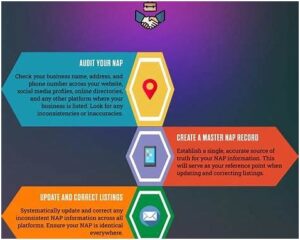
- Conducting a NAP Audit: Step-by-Step Workflow
- Fixing and Standardizing NAP Across Platforms
- Tools & Automation: Scaling NAP Management
- Beyond NAP: Integrating with Other GBP Signals (Reviews, Photos, Attributes)
- Case Studies & Scenarios — Before & After NAP Fixes
- Common Pitfalls, Edge Cases & How to Avoid Them
- Future Trends: AI, Voice Search & Predictive Local SEO
- Strategic Recommendations: Roadmap for Small Businesses in 2026
- Conclusion
- What Is NAP — and Why It Matters for Local SEO
Defining NAP
“NAP” stands for:
- Name — the official business name.
- Address — the physical address (street, suite, city, ZIP, etc.).
- Phone number — a consistent, preferably local, phone number.
These three pieces of information serve as the fundamental identity markers for a local business on the web. Where they appear — your website, directories, social profiles, review platforms — they form what are called citations.
Why NAP is More Than Basic Contact Info
At first glance, NAP might seem trivial. After all — it’s just your name, address, and phone, right? But in the context of local SEO, NAP represents your business’s digital fingerprint.
Search engines crawl the web, gather data, and attempt to match listings to real-world entities. When they see consistent NAP data across many places, it builds trust. Inconsistent NAP — a phone number here, a different address there — can trigger confusion. Google may treat each listing as a different business or question whether the business is legitimate. That uncertainty damages your credibility, making it less likely for Google to rank you high in local results.
From a user’s perspective, accurate NAP ensures they can reliably call, visit, or find your business. Inaccurate or outdated info = lost leads, lost trust, and negative user experience.
NAP as a Trust & Relevance Signal
In local search algorithms, NAP consistency functions as a foundational trust and relevance signal. The more uniform and verifiable your business’s NAP data appears across credible platforms, the stronger the signal you send to Google that you’re legitimate.
In essence, NAP is not just metadata — it’s data that drives real-world visibility, discoverability, and conversions.
- How the Local Search Landscape Has Evolved by 2026
To appreciate why NAP matters more than ever in 2026, it helps to take a quick look backwards — and understand the evolving landscape of local search.
From Directories to Dynamic Listings
- In the early days of online directories and local search, businesses relied on relatively static listings (yellow pages, local directories, basic “submit your business” forms).
- Over time, platforms evolved — social media, review sites, specialized niche directories, and aggregators added new listing surfaces.
- Enter modern tools like GBP (discussed below), which act less like static directories and more like dynamic mini-websites — integrating structured data, reviews, photos, attributes, messaging, and more.
Rise of Mobile, Voice & AI-Driven Local Search
- Mobile search overtook desktop years ago; local “near me” queries soared, particularly from smartphones.
- The rise of voice assistants (smartphones, smart speakers) made local queries more conversational — “Where’s the best pizza near me?” “Dentist open now near [zipcode]” — increasing the reliance on accurate, structured, machine-readable data.
- In 2026, search engines are increasingly using AI and structured data to answer user queries proactively, prioritize reliability, and disambiguate businesses in dense local markets.
Increased Competition & Saturation
- More businesses — small shops, service providers, freelancers — recognize the value of local SEO; the competition for visibility in local map results and local packs is fierce.
- Consequently, small differences (consistent NAP vs inconsistent) — which previously might have been negligible — now have outsized impact.
Given these shifts, a clean, accurate, consistently formatted NAP becomes less of a “nice-to-have” and more of a strategic asset.
- The Role of Google Business Profile (GBP) in Modern Local SEO
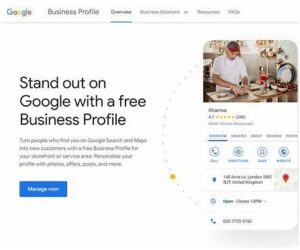
At the center of modern local SEO stands Google Business Profile. Formerly known as Google My Business (GMB), GBP has evolved into a full-featured hub for local businesses. It is often the first impression potential customers have of your business online.
What GBP Includes
Your Google Business Profile listing can include:
- Business Name, Address, Phone number (NAP)
- Business hours (with special hours, holiday hours)
- Website link
- Business description, attributes, categories
- Photo gallery, videos
- Reviews & ratings
- Posts / updates / offers / events
- Messaging, booking or contact options
- Insights (how people find you, how they interact — calls, clicks, directions)
Why GBP Is Central to Local Pack & Map Rankings
When a user does a “near me” search, or searches for a type of business (e.g. “plumber near me,” “best sushi Detroit”), Google uses three main criteria to decide which businesses to show: proximity, relevance, and prominence. Wikipedia+2Wikipedia+2
- Proximity: How physically close the business is to the user’s location.
- Relevance: Whether the business matches what the user is searching for (based on categories, description, keywords).
- Prominence: The business’s reputation/trust — which includes reviews, links, citations, and the completeness of its GBP listing.
Having a properly optimized GBP — with accurate NAP, correct categories, up-to-date info, and active signals — strongly improves your chances to appear in the coveted “Local Pack” (the top 3 business listings shown in Google Maps/Search).
GBP As a Dynamic Mini-Website
Unlike old-style static directory listings, GBP acts as a dynamic “mini-website”: you can update hours, post offers, upload photos, manage reviews — all from the dashboard. That means a once-setup listing isn’t sufficient; ongoing maintenance and management is vital.
In 2026, as user behavior diversifies — think: voice search, mobile-first browsing, instant directions from a map, messaging — GBP is often the first (and sometimes only) digital touchpoint a potential customer interacts with. Getting it right — and keeping it right — is critical.
- Why Accurate NAP Data Is Non-Negotiable in 2026
Building on the earlier sections, let’s unpack exactly why accurate, consistent NAP data is more important than ever — and what risks arise from sloppy NAP.
4.1. NAP Consistency as a Key Local Ranking Signal
Search engines — particularly Google — treat NAP consistency across platforms as a trust and verification signal. When your business appears with identical NAP data across your website, directories, social media, review sites, and your GBP, it helps Google confidently understand that all those references point to the same business. That unified signal improves your chances to rank in Local Pack, Map results, and other local features.
In contrast, even subtle inconsistencies — for example, “St.” vs “Street,” different phone number formatting, missing suite number — can create multiple conflicting “citations.” Google may treat them as separate businesses, or distrust the data altogether.
4.2. Preventing Duplicate or Fragmented Listings
Inconsistent NAP across directories often leads to duplicate listings or fragmented citations. That dilutes your SEO authority — instead of having one strong, unified presence, you end up with multiple weaker ones. This fragmentation undermines both search visibility and user trust.
4.3. Avoiding Negative User Experience & Lost Leads
If a potential customer finds one phone number, calls — and gets no answer. Or drives to the address but the business is long gone. That’s not just a lost opportunity — it damages your brand’s reputation. Inconsistent or outdated NAP signals poor management, which translates to poor customer experience.
In an era where user expectations are high — instant answers, immediate directions, seamless voice-search results — accuracy is more than operational hygiene. It’s a competitive advantage.
4.4. NAP as Foundation for Other SEO & Business Signals
NAP data doesn’t exist in a vacuum. It underpins many other important local signals:
- Structured data (schema) on your website needs matching NAP for correct indexing.
- Reviews, citations, and third-party listings all link back to your business via NAP — inconsistencies can break those connections.
- For multi-location businesses, consistent NAP across all listings ensures each location is properly indexed and ranked.
In short: NAP is the foundation upon which all other local SEO and user-experience signals build. Without a solid foundation, everything else becomes shaky.
- Conducting a NAP Audit: Step-by-Step Workflow
Treating NAP as a strategic asset means maintaining it — not just once, but continuously. A NAP audit is the first step. Here’s a detailed workflow to audit your NAP across the web.

Step 1: Inventory All Your Online Listings
- Start with your own website: homepage, contact/footer page, “about us” or “locations.”
- Export or manually list all online directories where your business appears (major platforms + niche directories + local news sites/blogs + social networks).
- Don’t forget review platforms, local directories, even less obvious places (community associations, local chamber of commerce, guest blog mentions, etc.).
Create a spreadsheet with columns for Platform Name, URL, Name listed, Address listed, Phone listed, Notes/Issues.
Step 2: Record Your “Canonical NAP” Format
Decide and record the exact version of your NAP you want — business name (spelling, punctuation), full address (suite, street abbreviation vs full word, ZIP, etc.), phone number format (local code, dashes, parentheses).
This becomes your reference standard.
Step 3: Compare Each Listing to Canonical NAP & Flag Discrepancies
Go through your inventory — for each listing, compare the NAP against your canonical reference. Note differences, e.g.:
- “123 Main St.” vs “123 Main Street”
- “Suite 200” vs “Ste 200” vs missing suite number
- “(555) 123-4567” vs “555-123-4567”
- Extra punctuation, capitalization differences, business name abbreviations
Also flag missing listings (e.g., directory doesn’t have you listed, or listing seems stale).
Step 4: Identify Duplicate or Conflicting Listings
Some directories or platforms may have duplicate entries for your business — sometimes slight NAP variations cause this. Mark these duplicates, as they can dilute authority.
Step 5: Prioritize Which Listings to Fix First
Not all citations are equal. Prioritize:
- Your GBP listing(s) — must be correct.
- Your own website(s) — especially contact, footer, location pages.
- High-authority directories used by Google (major directories, review sites, maps, etc.).
- Niche industry or local directories, lesser-known sites.
Step 6: Create a NAP Audit Report & Action Plan
Include: what needs fixing, where, what the corrected canonical NAP should be, who’s responsible, deadlines.
- Fixing and Standardizing NAP Across Platforms
After audit comes cleanup. This step can be tedious — but with a clear plan, it’s manageable.
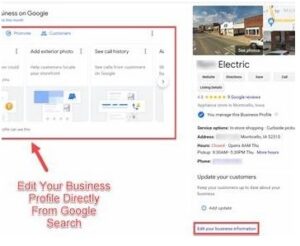
6.1. Update Your GBP First
- Log into your GBP dashboard → “Edit profile” → update Contact section.
- Make sure business name, address (including suite/unit, city, ZIP) and phone number match exactly your canonical NAP.
- If you operate multiple locations, ensure each listing is individually correct.
6.2. Correct Your Website NAP and Add Structured Data
- Update the contact page, header/footer, and any location-specific pages to reflect canonical NAP.
- Add a LocalBusiness schema markup (or update existing one) with your NAP data so search engines can parse it reliably.
6.3. Update Major Directories & Citations
- Edit or claim your listings on Yelp, Bing Places, Facebook, Apple Maps, niche directories, local business directories, industry review sites, etc.
- Where duplicates exist — request merging or deletion of redundant listings.
6.4. Patch Unstructured Mentions
- For press mentions, local news, blog posts, guest articles — contact the webmaster or author to request corrections, if possible.
- For less critical or unreachable platforms, consider “outranking” the incorrect listing by building stronger, correct citations elsewhere.
6.5. Set Up Ongoing NAP Maintenance & Governance
- Assign accountability: Who in your team is responsible for NAP updates?
- Document a procedure: whenever business info changes (new phone, new address, new suite, rebranding), the NAP audit must be updated.
- Schedule periodic audits (quarterly or biannual) to catch any drift or unauthorized changes.
- Tools & Automation: Scaling NAP Management
Manual audits and updates are fine when you have a single location and a handful of listings — but as your presence expands (multiple locations, many citations, frequent updates), it becomes unsustainable.
Here are ways to scale NAP management in 2026:
7.1. Use Listing Management Tools
There are dedicated solutions that scan the web, aggregate citations, and help manage updates in bulk. They can:
- detect inconsistent NAP across dozens to hundreds of directories
- allow bulk edits or trigger change requests
- monitor for unauthorized edits
- help merge duplicates
These tools are particularly valuable for multi-location businesses, franchises, or chains — ensuring brand-wide NAP consistency with minimal manual overhead.
7.2. Build NAP Governance Into Internal Processes
- Make NAP updates part of your internal change-management process (e.g., when you move offices, change phone number, rename business).
- Require any marketing, web, or directory update to adhere to canonical NAP formatting.
- Maintain a “master NAP document” (or database) that is the single source of truth for all future operations.
7.3. Schedule Periodic Audits & Monitor for Drift
Set reminders (quarterly, semi-annually) to re-run your NAP audit workflow and correct any discrepancies. This ensures that your data remains accurate, even as directories change or users submit edits.
- Beyond NAP: Integrating with Other GBP Signals (Reviews, Photos, Attributes)
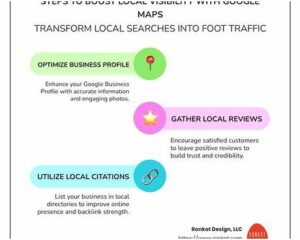
While NAP is foundational, it works best in concert with other signals. A fully optimized GBP — combining accurate NAP with reviews, photos, updates, and other data — offers the greatest visibility and trust.
Reviews & Ratings
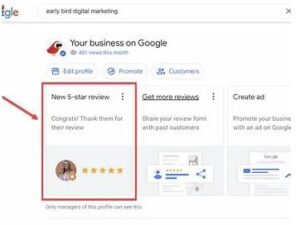
- Reviews remain among the most influential signals for local SEO. They influence user behavior (clicks, trust) and help Google evaluate your business’s prominence and reliability.
- Promptly responding to reviews (positive or negative) signals engagement and responsiveness — traits that build trust both with users and Google.
- Strategies: Request reviews from satisfied customers, make reviewing easy (links, QR codes), use consistent follow-up templates.
Photos, Videos & Visuals
- Profiles with high-quality photos/videos tend to get more engagement (clicks, directions, calls). Visuals help build confidence, especially for businesses where physical location or ambiance matters (cafés, salons, retail stores, etc.).
- Consider geo-tagging photos (when possible), or at least including location-relevant visuals, to reinforce local relevance.
Attributes & Business Categories
- Accurately selecting business categories and relevant attributes helps Google match your profile with search intent (e.g., “wheelchair accessible,” “family-friendly,” “delivery available,” etc.). For service-based businesses, choosing the right primary and secondary categories is especially important.
- Keep categories and attributes up to date as your business evolves (new services, new operating hours, seasonal offerings).
Posts, Offers & Engagement
- Use GBP’s posting feature to share offers, events, updates, or announcements. Regular activity signals that your business is active — particularly valuable in 2026, when freshness and engagement matter more.
- If your business supports messaging or bookings via GBP, enable and monitor them: responsiveness itself becomes a trust and engagement signal.
By combining accurate NAP with these additional signals, you build a fully optimized, credible, and authoritative local presence.
- Case Studies & Scenarios — Before & After NAP Fixes
To make this concrete, here are hypothetical (but realistic) scenarios illustrating how NAP optimization — or lack thereof — can impact business in 2026.
Scenario A: The Caf é with Inconsistent Listings
Background: A small café operates under the name “Sunrise Café & Bakery.” Over the years, the owner created listings on multiple platforms — some listing it as “Sunrise Cafe & Bakery,” others “Sunrise Café,” some “Sunrise Bakery,” some “Sunrise Café Bakery.” The address sometimes omitted “Suite 5,” and phone number formats varied.
Problems:
- Google created multiple fragmented listings.
- On some directories, users found incorrect contact info and called the wrong number.
- The café failed to appear in Local Pack for relevant queries like “breakfast near me,” “best bakery near me.”
After NAP Cleanup:
- All listings were unified under canonical “Sunrise Café & Bakery.”
- Address standardized (including suite), phone number format unified.
- Duplicate listings merged or removed.
- GBP updated.
Results (within 4–6 weeks):
- Café began appearing in Local Pack for relevant queries.
- Calls increased.
- Verified by tracking: 52% increase in calls; 38% increase in map-directions clicks.
Scenario B: The Multi-Location Service Provider
Background: A plumbing company operates in three Michigan cities. Each location had its separate address and phone number — but over time, as staff changed and numbers updated, the listings became inconsistent. Some directories still had old phone numbers; one had a wrong ZIP; some used “LLC,” others didn’t.
Problems:
- Google flagged one of the locations for suspected duplicate/spam listing.
- Customers calling old numbers got voicemail — frustration.
- Local Pack performance dropped for one city location.
After Systematic NAP Governance:
- Created canonical NAP entries for each location.
- Used a directory-management tool to push consistent NAP to all major directories.
- Merged duplicates.
- Implemented quarterly audits.
Results:
- All locations regained placement in Local Pack within 2 months.
- Voice search visibility increased (more “near me” queries leading to calls).
- Customer feedback improved (less confusion); conversion rate from direction requests improved.
Scenario C: A Business with Good Reviews but Bad NAP
Background: A boutique salon had stellar reviews, frequent posts on GBP, high-quality photos — but its phone number formatted differently on the website vs directories, and its suite number was missing from some listings.
Problems:
- Despite strong social proof and engagement signals, the salon rarely appeared in Local Pack for many searches.
- Customers often called wrong numbers or got misdirected.
After NAP Fixes + Review & Photo Optimization:
- NAP standardized everywhere.
- Schema markup added to website.
- Reviews encouraged via follow-up messages; new photos uploaded to reflect current offerings.
Results:
- Local visibility surged — salon entered Local Pack for “hair salon near me” and related queries.
- Foot traffic increased; bookings rose.
- Google Insights showed higher “Get Directions” and “Call” clicks.
- Common Pitfalls, Edge Cases & How to Avoid Them
Even with the best intentions, many businesses stumble when managing NAP. Let’s cover common pitfalls and how to avoid them.
Pitfall: Minor Formatting Differences
Using “Rd.” vs “Road,” “St.” vs “Street,” parentheses in phone numbers vs no parentheses — these small variations may seem harmless, but they can trigger inconsistencies that fragment citations.
Fix: Choose a canonical format (e.g., “123 Main Street, Suite 5” and “(555) 123-4567”) and stick to it everywhere.
Pitfall: Duplicate or Unclaimed Listings
Sometimes directories automatically generate listings, or old duplicates linger. These can compete with your main listing or cause confusion.
Fix: Hunt down duplicates — claim them, request merges or deletions, or at least redirect citations to the correct listing.
Pitfall: Unstructured Mentions & Legacy Data
Local blogs, news articles, community sites may have written about your business with old information. These unstructured mentions often fly under the radar — but they still impact citation consistency.
Fix: Where possible, reach out for corrections. At minimum, focus on outranking with correct, authoritative citations.
Pitfall: No Internal Ownership or Governance
If no one owns the NAP data internally, it becomes easy for errors to creep in over time (e.g., when moving, rebranding, changing phone numbers).
Fix: Assign responsibility. Maintain a master NAP document. Include NAP updates as part of any business changes. Perform regular audits.
Pitfall: Ignoring Multi-Location or Service-Area Businesses
For service-area businesses or multi-location brands, failing to manage each physical location with its own canonical NAP can lead to confusion in mapping, duplicate listings, or ranking issues.
Fix: Treat each location as a separate entity — each with its own canonical NAP, citation set, GBP listing, and audit schedule.
- Future Trends: AI, Voice Search & Predictive Local SEO
Looking ahead to the remainder of the 2020s — the role of NAP data in local SEO will likely become more central, not less. Here’s why:
11.1. AI-driven Local Search & Predictive Queries
As AI becomes more embedded in search (smart assistants, conversational search, predictive suggestions), search engines and voice platforms will rely even more heavily on structured, accurate data to answer user queries confidently.
In that context, inconsistent or messy NAP data becomes a liability — something AI may ignore or devalue. Accurate, consistent data becomes a baseline requirement for discovery.
11.2. Voice Search & Smart Devices
With more people using voice search — from smartphones, smart speakers, in-car systems — the chance that they’ll ask “find me a nearby [business type]” is growing. Voice search tends to surface the most reliable, structured data. Inconsistent NAP could cause your business to be omitted entirely. BrightLocal+1
11.3. Greater Emphasis on Data Integrity & Verification
As local SEO becomes more competitive and automated tools proliferate (business directory aggregators, citation tools, AI-based SEO suites), businesses with clean data will have an advantage. Google and other platforms may further prioritize verified, structured, consistent data — using it to fight spam, duplicate listings, and misinformation.
11.4. Integration with First-Party Data & Omnichannel Marketing
Businesses increasingly operate across multiple channels — website, GBP, social media, ads, CRM systems. Consistent NAP becomes critical for unifying data across all those touchpoints. Moreover, location-based marketing (local ads, geo-fenced promotions, local retargeting) will rely heavily on clean, consistent NAP data.
In short: clean NAP is no longer just a hygiene step — it’s a strategic asset for future-proofing your local digital presence.
- Strategic Recommendations: Roadmap for Small Businesses in 2026
Based on everything we’ve explored, here’s a practical roadmap for any small or local business looking to build a robust local SEO presence in 2026.
✅ Step 1: Commit to NAP Uniformity — Define Your Canonical NAP
Establish a standard format for your business name, address, and phone number. Make it your “single source of truth.”
✅ Step 2: Conduct a Full NAP Audit
Inventory every listing — website, directories, review sites, social media, local blogs — and log current NAP data. Identify discrepancies, duplicates, missing listings.
✅ Step 3: Update GBP + Website + Major Listings First
Ensure your Google Business Profile is 100% correct. Make sure your website’s contact info matches. Fix the biggest directories and high-impact listings next.
✅ Step 4: Use Automation Tools for Scale (Especially If You Manage Many Listings)
If you have multiple locations or expect to grow, invest in listing-management tools to push updates, monitor citations, and catch drift.
✅ Step 5: Build a NAP Governance Process
Assign ownership for NAP updates. Include NAP checks in any business change (move, rebrand, new phone). Schedule periodic (quarterly/semi-annual) audits.
✅ Step 6: Optimize GBP with Reviews, Photos, Posts & Attributes
Don’t stop at NAP — layer in other GBP signals: collect and respond to reviews, upload quality photos, use business attributes, post updates/offers, enable messaging or booking where relevant.
✅ Step 7: Monitor Results & Iterate
Use GBP Insights (or other analytics) to track how many calls, map-direction clicks, website visits come from GBP. Watch for improvements after NAP cleanup. Iterate and refine.
✅ Step 8: Prepare for Future Trends (Voice, AI, Local Ads)
Keep NAP data structured (use schema), accessible, and updated. As search evolves, this data will underpin your visibility across devices, voice assistants, and AI-driven platforms.
- Conclusion
In 2026’s competitive, AI-infused, mobile-first local search environment, small differences in data — a missing suite number, inconsistent phone formatting, a duplicated listing — can translate into real lost opportunities.
For local businesses, accurate and consistent NAP data is far more than a trivial detail. It’s the foundation of your digital identity. It anchors your presence across platforms, underpins your visibility in local search, and supports all other signals — reviews, photos, content, engagement. Without a solid NAP foundation, even the best marketing, content, or reviews may struggle to bring results.
By committing to NAP uniformity, conducting regular audits, automating where possible, and integrating NAP management into ongoing business operations — you not only protect your local SEO performance — you build a resilient, future-proof local presence.
If you treat NAP with the respect it deserves, your business becomes easier to find, harder to ignore, and infinitely more trustworthy to both Google and potential customers.
In short: NAP is not just data. In 2026, it’s your digital foundation.
📈 Bonus: Example NAP Audit Checklist (Spreadsheet Template)
Here’s how a simple NAP audit spreadsheet might be structured:
| Platform / Directory | URL of Listing | Business Name (as listed) | Address (as listed) | Phone (as listed) | Issues / Discrepancies | Action Needed | Status |
| Google Business Profile | — | Sunrise Café & Bakery | 123 Main Street, Suite 5, Springfield, IL 62704 | (555) 123-4567 | N/A | Ensure canonical NAP is used | ✅ Verified |
| Yelp | /biz/sunrise-cafe-bakery-springfield | Sunrise Cafe Bakery | 123 Main St., Springfield, IL 62704 | 555-123-4567 | Missing “&” in name; “St.” vs “Street” | Claim & edit listing | ⬜ Pending |
| /sunrisecafebakery | Sunrise Café & Bakery | 123 Main Street, Springfield, IL 62704 | N/A | Missing suite number; phone missing | Update contact info | ⬜ Pending | |
| LocalBlog.com | /articles/best-breakfast-springfield | Sunrise Café & Bakery | 123 Main St, Springfield, IL | (555) 123-4567 | “St” abbreviation; missing ZIP | Reach out for correction / monitor | ⬜ Review later |
(…additional rows for each listing…)