

Introduction
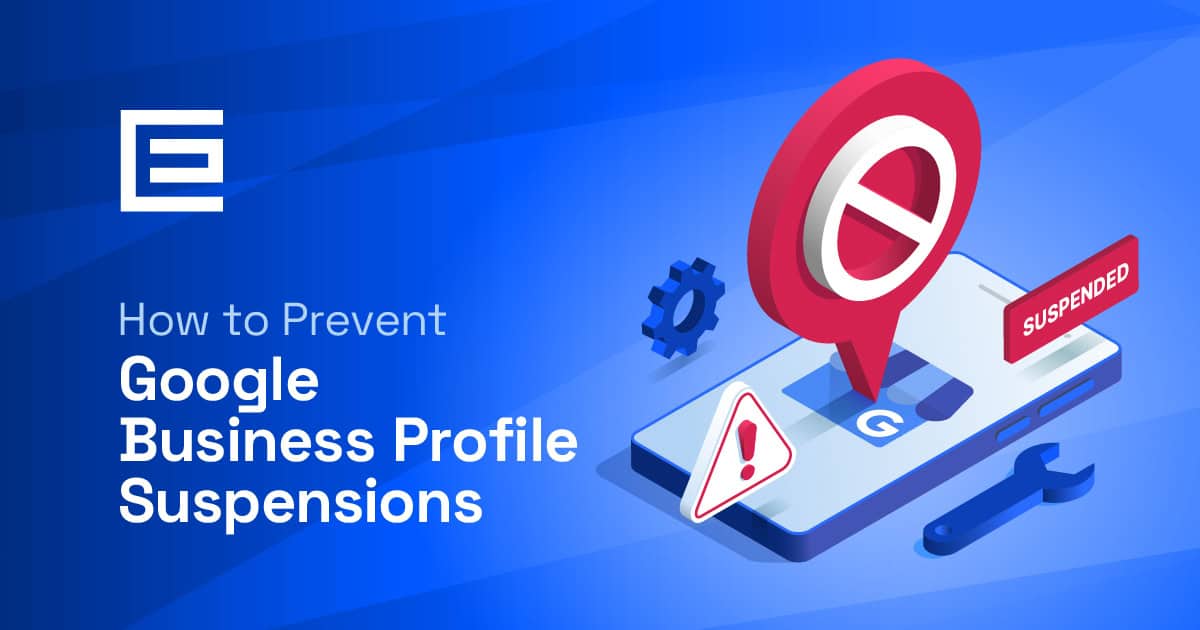
In 2026, your Google Business Profile (GBP) is more than a passive directory listing — it’s the cornerstone of your local SEO, your virtual storefront, and often the first impression a potential customer has of your business. But increasingly, it’s also a liability: with tightened policies, stricter enforcement, and growing misuse by spammy operators, a suspended GBP can cost you more than visibility — it can cost you credibility, leads, and revenue.
Gone are the days when suspension was rare or an afterthought; by 2026, proactive monitoring, compliance checks, and regular audits of your profile are no longer optional. They’re essential.
In this article, we’ll walk you through:
- Why GBP suspension risk has risen.
- What exactly GBP suspension means (soft vs. hard).
- The common pitfalls that trigger suspension — and new ones emerging for 2026.
- A full, proactive “profile hygiene” strategy: audits, monitoring, review handling, internal controls.
- What to do if your profile gets suspended anyway — and how to recover.
- How GBP protection fits into broader online reputation management and local SEO.
This is your comprehensive guide to safeguarding one of your most critical digital assets.
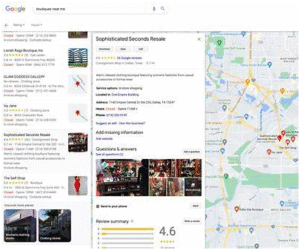

Chapter 1: Why GBP Suspension Risk Has Escalated
1.1 Changing Landscape of Local SEO & Spam
Over the past several years, as more businesses — legitimate and shady — have realized the power of local search, the pressure on major platforms like Google to police abuse has increased dramatically. What used to be a relatively lax or manual process is now far more automated, algorithm-driven, and vigilant.
- More “high-risk” industries: Sectors like locksmithing, real-estate, plumbing, HVAC, legal services, and more have historically drawn spammers or fake listings. According to GBP experts, these categories remain under special scrutiny.
- Automated enforcement & user reports: GBP suspensions can be triggered not only by internal review but also by user-generated “Suggest an Edit” reports. Even a single report can prompt a suspension.
- Stricter rules around addresses, legitimacy, and identity: Fake addresses (PO boxes, virtual offices, coworking spaces), inaccurate business info, or inconsistent NAP (Name, Address, Phone) data are no longer tolerated.
- Frequent Google policy updates: As Google refines its policies to reduce abuse — particularly in light of increasing fraudulent activity — what was compliant a year ago may no longer be compliant. Many businesses get caught out simply because they didn’t stay up to date.
As a result, GBP suspension is no longer rare or reserved for obvious “spam.” Even legitimate businesses that don’t actively monitor their listing can get caught up in sweeps, algorithm changes, or user reports.
1.2 Stakes Are Higher Than Ever
Why does this matter now more than before? Because for many small and local businesses, GBP is not just marketing — it’s lifeline.
- Lost visibility = lost customers. If your listing disappears from Google Search or Maps, potential customers can’t find you, call, or request directions. That’s a direct hit to lead generation. Many GBP suspension guides cite dramatic drops in traffic, calls, and conversions after suspension.
- Reputational hit. A suspended GBP might send a signal — to customers or even to competitors — that something is wrong with your business. Restoring trust afterward can be difficult.
- Time and resource drain to recover. As we’ll discuss later, reinstating a suspended profile requires auditing, evidence gathering, appeals — and possibly weeks of downtime. For many businesses, downtime equals lost revenue.
Because of that high cost, treating GBP as “set and forget” is no longer viable. The only sustainable path forward in 2026 is proactive, ongoing monitoring and compliance.
Chapter 2: Understanding GBP Suspension — Soft vs. Hard
Before diving into prevention, it’s critical to understand what “suspension” really means. The consequences — and recovery strategies — differ significantly depending on the type.
2.1 Soft Suspension
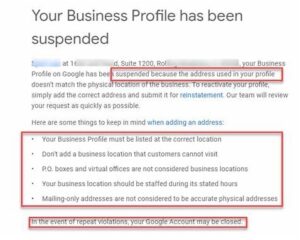
- Definition: Your listing remains visible on Google Search and Maps — but you lose management access. That means you can’t edit details, respond to reviews, or make updates.
- How it happens: Often triggered by relatively minor “red flags” — e.g., a recent change to business name or address, suspicious edit patterns, or a questionable service area / address setup.
- Impact: While customers might still see your business, you lose control. You can’t update business hours, respond to reviews, or correct outdated info — which over time degrades reputation and trust.
2.2 Hard Suspension
- Definition: Your GBP is completely removed from Google Search and Maps. It no longer appears in search results, map listings, or local pack results.
- How it happens: Usually the result of more serious violations — e.g., false or misleading business information, duplicate listings, fake addresses, or violations of Google’s content or representation policies.
- Impact: Complete invisibility. For many businesses, that means a sudden, steep drop in leads, calls, website traffic — and possibly revenue loss.
2.3 The “Appeal Gap” Problem
Google doesn’t always tell you exactly why your account was suspended. Often, the email or dashboard notification simply lists a generic “Policy Violation” or “Suspicious activity.” This ambiguity can make diagnosis and recovery frustrating and time-consuming.
As a result:
- Recovery becomes a process of trial and error.
- You may have to gather documentation (licenses, utility bills, real-world photos) and appeal, often more than once.
- The downtime can last weeks — a disaster if your business depends heavily on local leads.
This “unknown risk” makes a strong case for proactive prevention over reactive fixes.
Chapter 3: What Triggers GBP Suspension — Common Pitfalls & New Risk Areas
To protect your GBP, you must know what to watch out for. Some pitfalls are well-known — others are emerging or evolving. Below is a breakdown of the most common triggers, illustrated with real-world examples and “profile hygiene” red-flag checklists.
3.1 Classic Mistakes That Still Get Businesses Suspended
Here are the most frequent — and long-standing — reasons for GBP suspension. They remain relevant in 2026.
| Mistake / Trigger | Why It’s Risky / What Google Sees | Proactive Prevention Tips |
| Wrong or misleading business information (name, address, phone, website) | Mismatch between your real-world info and what’s listed undermines Google’s trust. They treat this as misrepresentation. | Keep name, address, phone consistent across website, GBP, directories. Review quarterly. |
| Using PO boxes, virtual offices, coworking spaces, or mail centers instead of a real address | Google requires real, physical presence for business listings — using mail centers or PO boxes violates that. | Use real storefront or service-area address; if home-based, mark as “service-area business” and hide address. |
| Keyword stuffing business name (e.g. “Best Plumber Detroit Cheap Rates”) | Adds keywords not part of legal business name — considered spammy / manipulative. | Use only your official, registered business name. Avoid adding extra keywords. |
| Duplicate listings / multiple profiles for same location | Google deems duplicates as spam, can lead to suspension or merging — risking removal. | Audit regularly for duplicate listings, especially for past employees, closed locations, or alternate addresses. |
| Inconsistent or misleading business categories or service areas | Claiming to serve areas or services you don’t legitimately cover violates GBP guidelines. | Ensure categories and service areas reflect reality. Update responsibly. |
| Unverified profile or failing to complete verification | Unverified or partially verified listings are more likely to be flagged, and may lose trust with Google. | Complete verification promptly; monitor verification status. |
| Posting prohibited or spammy content (reviews, photos, promos) | Fake reviews, misleading promotions, user-generated spam content can all trigger violations. | Moderate user content; avoid incentivized or fake reviews; ensure photos/promotions are genuine. |
| Frequent or bulk edits / abrupt changes to key info | Sudden multiple changes (name, address, hours, category) look suspicious and may flag automated enforcement. | Spread out changes. Review carefully before updating. Maintain change log. |
These are not new risks — but they remain among the most common reasons businesses get suspended in 2025–2026.
3.2 Emerging & Underappreciated Risks for 2026
Because Google’s algorithms and review systems evolve, a few newer or under-seen risk areas have emerged. Forward-thinking businesses should pay particular attention.
3.2.1 Increased Scrutiny on High-Risk Industries
Businesses operating in “high-spam history” industries — locksmiths, home repair, some legal or financial services — are under extra scrutiny. Google appears more likely to audit or suspend these businesses even when they comply.
This means: compliance isn’t optional; you must build extra signs of legitimacy — e.g., proper licensing, up-to-date credentials, verified storefront photos, consistent NAP and website registration.
3.2.2 User Reports & Community Edits — The Wild Card
Any Google user can hit “Suggest an Edit” or flag a profile if they believe something is wrong. Sometimes the trigger is malicious — a competitor, a disgruntled customer — but Google may suspend first and ask questions later.
Because of this:
- Even if you follow all guidelines, you can get suspended.
- You may have only a narrow window to appeal or prove authenticity.
- Reputation management now requires vigilance not only from you but also “crowd-source defense.”
3.2.3 Unauthorized Access / Agent Risk
If you give a marketing agency, SEO firm, or external user access to manage your GBP, and that account is flagged (even for another client), your business could be penalized. Some GBP suspension guides mention “rogue account managers” as a trigger.
In 2026, as agencies scale and manage multiple clients, this risk is even more real.
3.2.4 Inactivity or Neglect — The “Dormant Listing” Risk
Interestingly, some suspensions come not from “bad behavior,” but from lack of activity. When listings remain unreviewed for long periods — no updates, no review responses, no photos, nothing — Google’s system may mark them as neglected or abandoned, especially if other red flags (like virtual address) are present.
This means that inactivity is not neutral — it can contribute to risk.
Chapter 4: The Cost of Getting Suspended — Real Consequences for Local Businesses
To underscore why proactive GBP protection matters, let’s dive into what a suspension can cost you — beyond just “visibility lost.”
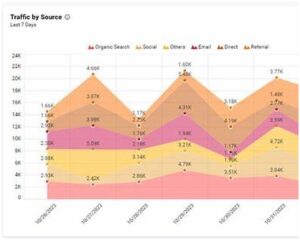

4.1 Immediate Loss of Leads, Calls, and Foot Traffic
For many small businesses, GBP is a primary source of leads and customer contact because potential customers search “near me” or “business type + location.” When your listing disappears:
- Call volumes drop — fewer people click to call or request directions.
- Website visits fall — many customers discover businesses via the Google listing, then click to website.
- Foot traffic drops — for retail or service-based businesses, less visibility = fewer walk-ins.
According to industry case studies, many businesses report “significant drop” in leads and conversions after suspension.
4.2 Damage to Reputation and Trust
A suspension can send negative signals: to customers, partners, or competitors. That can create:
- Lower trust — customers may wonder why you disappeared or if your business is legitimate.
- Lost competitive edge — while you’re offline, competitors can rank above you and capture your potential customers.
- Long-term brand damage — reinstating doesn’t guarantee you’ll instantly recover your ranking, reviews, or reputation.
4.3 Time, Money, and Resource Investment for Recovery
Recovering a suspended GBP isn’t just “flip a switch back on.” In many cases, reinstatement requires:
- A detailed audit of your listing and business data.
- Collection of real-world documentation: business license, utility bills, photos of storefront, signage, licenses, etc.
- A formal appeal — often multiple rounds.
- Potential downtime of weeks — during which you remain effectively offline on Google.
For small businesses — especially those reliant on local customers — that can be devastating.
4.4 Opportunity Cost & Competitive Loss
While you scramble to reinstate your GBP, competitors don’t wait. They may:
- Capture your traffic.
- Rank higher in local search or Maps.
- Gain new reviews, calls, bookings — becoming the “top choice” by default.
Even after reinstatement, it can take time to rebuild visibility, reviews, and trust.
All these costs — financial, reputational, operational — make GBP suspension more than an annoyance. For many businesses, it’s existential.
Chapter 5: Proactive GBP Protection — A “Profile Hygiene” Strategy for 2026
Given the risks and costs, the only sustainable approach in 2026 is proactive, continuous protection of your GBP. Think of your profile as a critical business asset — like your storefront, license, or customer database — that requires regular maintenance, monitoring, and defense.
Below is a comprehensive “profile hygiene” strategy you can implement immediately.
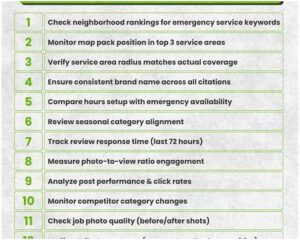
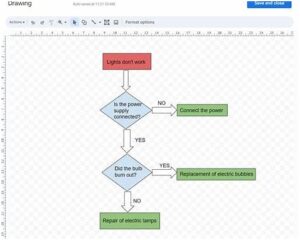
5.1 Quarterly GBP Audit & Data Consistency Checks
What to audit:
- Business Name, Address, Phone number (NAP) — verify they match legal registration, website, signage, and external directories.
- Business Category and Services Offered — ensure categories are accurate and reflect actual services.
- Address type — ensure you’re using a real physical address if applicable (not a PO box, mail center, or coworking space). For service-area businesses, ensure the address is properly hidden and service area is correctly defined.
- Business Hours — ensure they’re accurate, especially for holidays or special events.
- Owner/Manager list — review who has access, remove stale or untrusted user accounts.
- Photos and media — ensure they reflect actual business (logo, storefront, interior) and no inappropriate or misleading images.
Why quarterly: Because Google’s policies and algorithms may evolve — what’s compliant today may not be tomorrow. Regular audits help catch issues early, before they trigger suspension.
5.2 Controlled Process for Updates & Changes
If you need to change anything (name, address, hours, category, etc.), follow a staged, deliberate process:
- Plan changes carefully — gather necessary documentation (licenses, permits, proof of address) in advance.
- Make one change at a time — avoid bulk edits.
- After each change, monitor your profile for a few days.
- Document the change in an internal log (date, what changed, reason).
This reduces the risk of triggering automated spam detection or manual review flags.
5.3 Access Control & Internal Governance
- Limit who has “Owner” or “Manager” access to your GBP.
- Regularly audit users — remove former employees, inactive agencies, or unknown accounts.
- Prefer internal staff for critical changes; if using an agency, ensure they have a clean history and follow compliance protocols.
As one GBP guide warns, “rogue account managers” who make spammy edits or manage multiple high-risk profiles can trigger suspension. Google Help+1
5.4 Review & Reputation Monitoring
Because user reports and community edits are a major risk vector in 2026, you must have a reputation monitoring system in place. This includes:
- Regularly reviewing new reviews and user-suggested edits.
- Responding quickly (within 24–48 hours) to negative or suspicious reviews. A timely, professional response helps show legitimacy.
- Flagging — not deleting — suspicious or malicious reviews (fake reviews, spam). You can report them to Google.
- Tracking sentiment, patterns, and review sources (especially if you notice many reviews from similar IPs, patterns, or spammy behavior).
This not only protects your GBP from suspension but also helps you maintain credibility, trust, and SEO value over time — similar to modern reputation management practices.
5.5 Documentation & “Proof of Existence” Archival
Maintain a folder (digital or physical) with up-to-date proof of business legitimacy:
- Business license / registration documents.
- Utility bills or lease agreements showing physical address.
- Photos of storefront, signage, interiors (dated).
- Ownership or management change documentation.
- Service contracts, invoices, or other documents showing real operations.
If Google ever requests proof (especially after suspension), having these ready can significantly speed up the appeal process.
5.6 Automation & Monitoring Tools
For businesses with multiple locations or high review volume, manual monitoring isn’t enough. In 2026, using specialized tools (or internal dashboards) is increasingly common. Key features to look for:
- Alerts for profile edits or user-suggested changes.
- Notification of new reviews (positive or negative).
- Monitoring of NAP consistency across external directories.
- Scheduled quarterly audits with reports.
These tools function like “insurance” — they don’t guarantee no suspension, but they dramatically reduce risk and shorten response time.
Chapter 6: What to Do If It Happens — GBP Suspension Recovery Protocol
Even with the best prevention, sometimes suspension happens anyway. What then? The key is to treat it like an incident response: diagnose quickly, gather evidence, appeal cleanly, and restore operations.
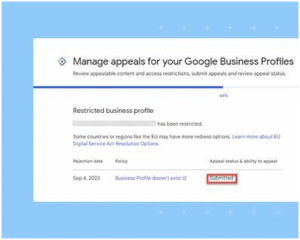

6.1 Step 1: Diagnose What Kind of Suspension
First: figure out whether it’s a soft or hard suspension, and what triggered it. Some tactics:
- Login to GBP Dashboard: check for “Suspended” or “Needs Review” messages.
- Check your email: Google often sends a notification — though the reason may be vague (e.g., “Policy Violation”).
- Review recent changes: Did you, or someone with access, make edits recently? Name, address, category, hours, photos? Bulk changes? Suspicious edits?
- Check for duplicates or conflicting listings: Maybe at the same address/phone, or another user claimed ownership.
Understanding the likely trigger will inform your remediation efforts.
6.2 Step 2: Correct Errors & Gather Proof
Once you identify likely issues:
- Fix inaccurate or misleading information (name, address, phone, category, hours).
- Remove prohibited content (spam photos, fake offers, unnatural review solicitations).
- Reconcile duplicates — claim or close duplicate listings, remove virtual office or mail-center addresses.
- Collect evidence:
- Business license, registration docs
- Utility bills or lease agreement showing physical address
- Photos of storefront, office interior, signage (dated)
- Any other documents proving real-world presence: invoices, contracts, service receipts, etc.
6.3 Step 3: Submit Appeal — Thoughtfully and Thoroughly
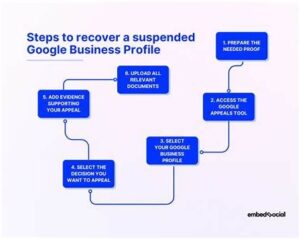
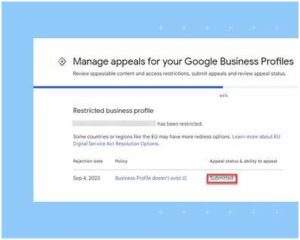
Using the official GBP appeals tool:
- Sign into the Google Account associated with the profile. Google Help+1
- Select the affected Business Profile.
- Fill out the appeal form — include a clear explanation.
- Upload supporting evidence (within 60 minutes of opening the upload form) — license, utility bills, photos, etc. Google Help
- Submit and monitor status. Be ready to answer follow-up requests from Google.
6.4 Step 4: Post-Appeal Monitoring & Clean-Up
After submitting appeal:
- Monitor your email and GBP dashboard for updates.
- Avoid making any major edits until reinstatement — extra changes can reset the appeal or trigger further flags.
- If reinstated, review your listing carefully — ensure nothing suspicious remains.
If appeal fails: treat it as a trigger event — go back to audit, update your records, and plan a cleaner rebuild.
6.5 Step 5: Build Back with Better Hygiene & Monitoring
Once reinstated (or starting fresh), implement your proactive protection strategy: audits, documentation, monitoring tools, internal governance, and regular review response.
One GBP recovery guide frames reinstatement as an opportunity for a “fresh, clean slate” — but only if you commit to better practices going forward.
Chapter 7: GBP Protection as Part of Broader Online Reputation & Local SEO
In 2026, GBP protection should not be siloed — treat it as part of a broader online reputation and local SEO strategy.
7.1 Why GBP is Core to Local SEO & Reputation
Your GBP is often the first touchpoint:
- Google reviews — widely trusted by consumers; many rely on them before choosing a business.
- NAP consistency across web properties — directory listings, website, social media — builds trust and improves ranking.
- Active engagement (reviews, posts, photos updates) signals to Google and customers that your business is alive and legitimate.
If you treat GBP as just a “listing,” you’re missing its power as a central node of your online presence.
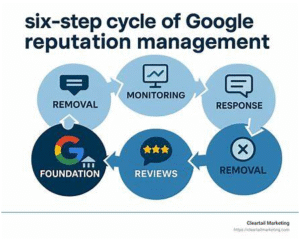
7.2 Integrating GBP Monitoring with Reputation Management
Think of GBP protection as one component of a larger “reputation stack”:
- Review monitoring & management — respond to reviews, flag suspicious ones, encourage genuine customer feedback.
- Directory & citation audits — make sure your business info is consistent across all major directories, citations, industry sites.
- Social listening & brand mentions — track what people say about your business beyond Google. Third-party discussions, forums, social media all influence perception.
- Content & digital footprint management — ensure your website, social profiles, and GBP reflect the same branding, messages, and professionalism.
- Compliance & documentation vault — license docs, address proofs, business records — to respond quickly if a compliance issue arises.
In short: treat your GBP as a linchpin asset — one that intersects SEO, reputation, brand, and customer acquisition.
7.3 For Multi-Location or Growing Businesses: Scaling Safely
If your business has multiple locations (branches, franchises, satellite offices), GBP protection becomes more complex — but also more critical. Consider:
- Centralized control dashboards — to monitor all locations at once, track edits, detect suspicious activity.
- Standardized onboarding and compliance templates — ensure each location meets GBP requirements: proper address, licensing, photos, contact information, etc.
- Automated alerts & workflows — whenever a location’s GBP gets flagged, edited, or loses verification.
- Regular multi-location audits — ideally quarterly or semi-annually.
Without this kind of institutional discipline and oversight, even large brands risk suspension — not just one-off listings.
Chapter 8: Strategic Recommendations for 2026 & Beyond
Based on trends, risk factors, and best practices, here are strategic recommendations for any business serious about protecting — and maximizing — its GBP in 2026 and beyond.
4
8.1 Build “GBP Protection” Into Your Quarterly Operating Rhythm
- Treat GBP audit and update as part of your regular business operations — like financial reviews or compliance audits.
- Assign a dedicated internal (or agency) owner responsible for GBP hygiene.
- Maintain a living document (spreadsheet or project management tool) tracking edits, changes, access, documentation, and reviews.
8.2 Combine GBP Protection with Reputation & Customer Experience Strategy
Don’t treat GBP as isolated — integrate with:
- Customer feedback and review requests (post-service follow-ups).
- Reputation monitoring and sentiment analysis.
- Weekly or monthly social listening.
- Real-time response to negative reviews, misinformation, or malicious edits.
This helps ensure GBP stays credible — and that your brand benefits from positive interactions, strong reviews, and active engagement.
8.3 Limit and Secure Access — Internal Governance + Agency Vetting
If using external partners:
- Vet agencies carefully. Ask about their GBP compliance history.
- Grant only necessary permissions — avoid giving full “Owner” access unless absolutely needed.
- Use agency dashboards or internal tools rather than sharing owner credentials.
- Periodically review and rotate user access.
8.4 Maintain a “Proof of Existence” Documentation Vault
Especially for high-risk industries or multi-location businesses: maintain real-world documentation as a hedge.
- Store digital copies of licenses, lease / utility bills, photos, business registration docs.
- Keep dated storefront photos.
- Maintain records of service contracts, invoices, or any evidence of actual operations.
- Update every 6–12 months.
This not only helps in appeals — but also serves as a deterrent against spammers/fraudsters using false addresses or shell listings.
8.5 Use Monitoring Tools or Automation for Scale
For growing businesses or those with many locations: adopt tools / software that can:
- Watch for profile edits, new reviews, or user-suggested changes.
- Alert on unusual activity (multiple edits, duplicate listings, sudden review spikes).
- Help schedule regular audits and generate compliance reports.
This effectively turns GBP monitoring into an ongoing “security operation.”
8.6 Prepare a Suspension Response Plan Ahead of Time
Just like cybersecurity or crisis-prep, have a “what-if” plan ready:
- Who on your team handles suspension emergencies.
- Where you store documentation.
- How you communicate with customers or stakeholders in the event of a downtime.
- Steps to audit, correct, appeal — and rebuild reputation.
Having this in place beforehand dramatically reduces downtime and confusion during a real incident.
Chapter 9: Case Studies & Hypotheticals — What Can Go Wrong (and How Proactive Work Saves the Day)
To illustrate the importance of proactive monitoring and protection, below are a few hypothetical case studies — drawn from patterns commonly observed among businesses that got suspended, and how they recovered (or failed).

9.1 Case Study: The Local Café That Moved — and Forgot to Update GBP
Background: A small café — “Sunrise Bakes” — moved to a new physical location. The owner updated the address on the website, but forgot to update GBP. They assumed the old address would redirect or that Google would detect the change.
What happened: After a few weeks, the listing was flagged and suspended. Because the business address no longer matched the real location (and website), Google marked it as misleading.
Cost: Lost visibility, no map searches, drop in walk-ins, and a steep drop in revenue.
Recovery (if owner had been proactive):
- A quarterly audit would have caught the discrepancy quickly.
- Having a documentation vault (new lease agreement, utility bills) would have allowed a swift appeal.
- Staged update: first update address on website, then update GBP with evidence — avoiding suspicious bulk changes.
Outcome (actual): It took 3 weeks and multiple appeal attempts before the café got reinstated. During that time, foot traffic dropped by 60%.
9.2 Case Study: The Service Provider Who Relied on a Virtual Office
Background: A small home-service business (e.g., HVAC, plumbing) used a mailbox service / virtual office address to list their business on GBP, to preserve privacy and avoid showing their home address.
What happened: Google flagged the address as a mail-center / virtual office (not a real physical storefront), leading to hard suspension — because the business lacked a “legitimate physical presence.”
Cost: Complete removal from Google Maps; loss of call leads; sudden revenue loss.
Recovery (if done proactively):
- At onboarding, using home address but marking as “service-area business,” hiding address publicly.
- Having documentation (proof of home address + service receipts) in documentation vault.
- Avoiding triggers around virtual-office addresses in the first place.
Outcome (actual): The business struggled to get reinstated. Their appeals were denied twice because they couldn’t prove real-world presence. It took them nearly 2 months to rebuild presence — starting from scratch with a new listing.
9.3 Case Study: Multi-Location Business & Rogue Agency Access
Background: A growing business with 5 locations — they hired an agency to manage all GBP listings and marketing. The agency used one Google account for all locations.
What happened: The agency’s account got flagged (for a different client), which triggered a cascade: Google flagged all linked GBP listings. As a result, 4 out of 5 locations were soft-suspended; one got hard-suspended when duplicate listing issues emerged.
Cost: Partial — but significant — downtime across multiple locations; clients experienced confusion; revenue dipped.
Recovery (with proactive governance):
- If each location had separate accounts or properly controlled access, a single flagged account wouldn’t have affected all listings.
- An internal audit of agency history, clean access practices, and regular user reviews could have prevented the cascade.
- A documented “access log” would have helped identify and sever the problematic account quickly.
Outcome (actual): The business replaced the agency, restructured access rights, and instituted quarterly GBP audits. Recovery took about a month — but they regained full control and implemented safeguards to prevent future incidents.
Chapter 10: Why Proactive Monitoring Is No Longer Optional — A 2026 Imperative
Looking at the landscape, consequences, and risk factors — the conclusion is clear: in 2026, proactive GBP monitoring and protection is not a luxury, it’s a business necessity.
- The risk of suspension is high — for mistakes, neglect, or external factors beyond your control (user reports, audit sweeps, algorithm changes).
- The cost of suspension is severe — potential loss of leads, revenue, trust, brand, and time.
- Recovery is slow, uncertain, and resource-intensive — not a reliable fallback.
- For multi-location, high-risk, or growing businesses, the stakes are even higher — a single failure can cascade.
- By contrast, proactive “profile hygiene” — audits, documentation, monitoring, governance — significantly reduces risk, enables quick recovery if needed, and supports long-term reputation and SEO goals.
Think of GBP as infrastructure — like a storefront, a license, or a regulated business asset. You wouldn’t leave your physical storefront unmanaged or your business license unattended; likewise, your GBP deserves the same level of care, attention, and protection.
Final Thoughts
In 2026, your Google Business Profile is far more than an online listing — it’s a core business asset, a central hub for reputation and discovery, and a link between your real-world operations and the digital world.
But with greater visibility comes greater responsibility. As Google tightens enforcement, spam detection, and user-driven oversight, the risk of suspension is real — even for honest, well-intentioned businesses. And the cost of suspension is more than just a “nuisance.” It can hit your leads, revenue, brand, and long-term viability.
That’s why proactive monitoring and protection of GBP is no longer optional. It’s essential.
By implementing a consistent “profile hygiene” routine — audits, documentation, controlled updates, access governance, review monitoring — you transform your GBP from a fragile asset into a resilient foundation for local SEO, reputation, and customer trust.
And if suspension does happen — you’ll already have the tools, documentation, and processes in place to diagnose, appeal, and restore quickly, minimizing downtime and disruption.
In short: treat your GBP like the critical business infrastructure it is. Because in 2026, that’s exactly what it is.