


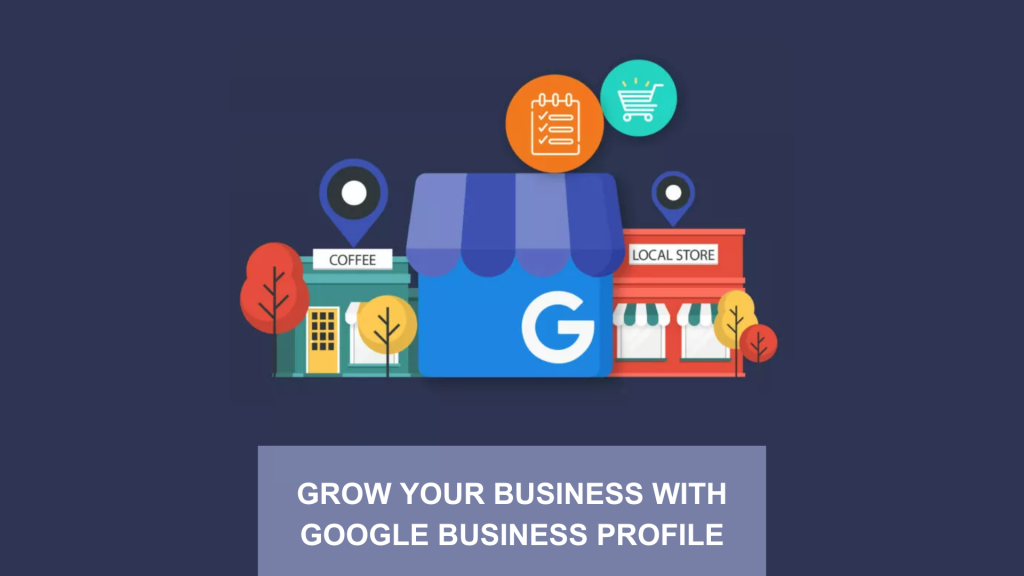

In the competitive digital landscape of 2025, businesses no longer compete solely through websites and ads—their Google Business Profile (GBP) is now one of the most influential digital assets for local and national visibility. GBP acts as a virtual storefront, showcasing key details like operating hours, customer reviews, and business descriptions directly in Google Search and Maps results. Yet, what often separates a high-performing GBP from an underperforming one lies in one simple but powerful element: categories.
Categories define what your business is, not just what it offers. They shape how Google interprets your profile, determines your relevance in search queries, and even influences which features—like menus, booking buttons, or reviews—become available. Selecting and optimizing these categories can drastically improve your rankings, impressions, and engagement.
As Google’s search algorithm continues evolving, so too does the sophistication of category recognition. In 2025, category optimization is about more than keywords; it’s about intent mapping, AI-driven visibility, and experience personalization. This guide breaks down every nuance of choosing, testing, and perfecting GBP categories so that your business dominates the local search ecosystem.
1. Understanding Google Business Profile Categories (Expanded)
Google Business Profile categories are the foundation of your visibility. Think of them as the metadata that helps Google understand your business identity. When users search for a term—like “emergency vet near me”—Google uses categories to determine which profiles to show in its Local Pack, Map results, and Knowledge Panels.
There are two types of categories:
- Primary Category: Defines your main business type. It carries the heaviest ranking weight.
- Secondary Categories: Supplementary descriptors that clarify your services or products.
Each GBP profile can include one primary and up to nine secondary categories. These designations guide Google’s contextual understanding, improving your ranking for broader sets of related searches.
Example:
If your business is a full-service marketing agency, you might use:
- Primary Category: Marketing Agency
- Secondary Categories: Advertising Agency, Internet Marketing Service, Graphic Designer, Web Designer.
By aligning these accurately, you create a semantic network around your brand that improves your appearance in relevant searches.
2. The Importance of GBP Categories in Local SEO (Expanded)
In local SEO, your visibility depends on Google’s perception of relevance, distance, and prominence. Categories influence all three. The closer your chosen category aligns with searcher intent, the higher your business will appear.
Categories directly impact how Google displays your business:
- In Search: Through the “Local 3-Pack” at the top of results.
- In Maps: By proximity and relevance-based listing order.
- In Knowledge Panels: Determining which features and information appear.
For example, if you run a “Home Renovation Company” but select “Construction Company,” you might lose visibility for specific intent-based searches like “kitchen remodel near me.” Fine-tuning this distinction can increase local visibility by up to 40%, according to multiple SEO studies.
The lesson is clear: categories are not static; they evolve alongside your business focus and consumer behavior. Continual optimization ensures Google consistently interprets your business correctly.
3. 2026 Updates: What’s New in Google Business Profile Categories (Expanded)
Each year, Google refines and expands its business category database. In 2025, the platform surpassed 4,350 unique categories, reflecting major global shifts such as automation, sustainability, and digital transformation.
New Additions in 2026:
- AI Services: AI Consultant, Machine Learning Engineer, AI Marketing Agency.
- Sustainability Focus: EV Charging Station Installer, Solar Consultant, Eco-Friendly Cleaning Service.
- Telepresence & Hybrid Models: Virtual Fitness Trainer, Online Therapy Clinic, Remote Legal Consultant.
These additions reflect an expanding economy where hybrid and AI-assisted services are now mainstream.
Key Algorithmic Changes:
Google’s algorithm now assigns weighted value to secondary categories. That means your profile may rank for broader intent-based searches if you’ve strategically chosen secondary options that reinforce your primary category.
Example: A “Plastic Surgeon” who also selects “Medical Spa” and “Cosmetic Dermatologist” can now rank for a larger pool of beauty- and medical-related search terms.
4. How to Choose the Right Primary Category (Expanded)
Choosing your primary category isn’t guesswork—it’s a process of research, validation, and continuous refinement.
Step-by-Step Process:
- Identify Business Intent: What’s your main service line? What’s your profit-driving focus?
- Research Keywords: Use Google Trends or Localo’s insights to find which phrases your local customers search most.
- Check Competitor Profiles: Analyze which categories dominate local map packs.
- Validate with Data: Match search volume and category relevance.
- Monitor Results: Reassess quarterly based on engagement metrics.
Example Decision Tree:
Business Type → Core Service → Customer Intent → Primary Category → Performance Review
Pro Tip:
Avoid overly generic categories. A “Restaurant” will compete with hundreds of listings, while “Vegan Restaurant” narrows your audience but significantly increases conversion rate.
5. Optimizing Secondary Categories for Broader Visibility (Expanded)
Secondary categories amplify visibility and relevance by expanding your profile’s semantic footprint. Think of them as “intent bridges” between your main service and related interests.
Best Practices:
- Limit yourself to 3–5 well-targeted categories.
- Keep them directly related to your offerings.
- Update them quarterly or during seasonal campaigns.
Example:
A “Landscaping Company” might add:
- Tree Service
- Irrigation Equipment Supplier
- Snow Removal Service (seasonal)
Each addition opens new discovery opportunities. Businesses that regularly review and adjust secondary categories report up to 25% improvement in local impressions.
6. Tools for GBP Category Research and Tracking (Expanded)
Recommended Tools:
- PlePer – Discover and compare all current Google categories.
- Localo – Benchmark your profile against competitors and get insights on ranking categories.
- BrightLocal – Measure performance per location and track visibility metrics.
- GMBSpy – Analyze live competitors’ GBP data from Chrome.
- Google Business API – Automate audits for large multi-location operations.
Why They Matter:
Using a mix of these tools allows for informed decisions rather than intuition-driven updates. Category optimization is most effective when it’s data-backed.
7. The Relationship Between Categories and Profile Features (Expanded)
Your chosen categories unlock or restrict GBP features. For instance:
- Restaurants unlock menus, delivery, and reservations.
- Hotels unlock booking links and amenities.
- Doctors enable appointment scheduling.
- Retail stores enable product catalog listings.
Choosing the wrong category could mean losing essential engagement options. For example, a clinic listed as a “Health Consultant” won’t have access to “Book Appointment” features available to “Medical Clinics.”
Optimization Strategy:
Select categories that maximize profile utility—not just visibility. The right setup improves user interaction and conversion simultaneously.
8. Advanced Category Strategies for 2025 (Expanded)
- Geo-Intent Segmentation: Tailor categories for each location. A store downtown might use “Fast Service Restaurant,” while a suburban one might use “Family Restaurant.”
- AI-Driven Category Clustering: Leverage tools like ChatGPT or BrightLocal to map related categories and their search overlaps.
- Seasonal Category Adjustments: Adapt to market trends—e.g., add “Tax Consultant” during Q1 or “Holiday Catering” in Q4.
- Performance Testing: A/B test primary categories over 90 days. Measure which drives higher engagement in Insights.
9. Common Mistakes to Avoid (Expanded)
Top Mistakes:
- Using irrelevant or misleading categories.
- Failing to update categories with new offerings.
- Overusing secondary categories.
- Neglecting analytics.
Solution: Conduct quarterly audits and remove any low-performing or deprecated categories.
10. The 2025 GBP Category Optimization Framework (Expanded)
Step 1: Audit – Gather all current category data. Step 2: Competitor Review – Identify local leaders. Step 3: Apply Changes – Optimize primary and secondary categories. Step 4: Track KPIs – Monitor clicks, calls, and direction requests. Step 5: Iterate Quarterly – Refine based on data.
This framework ensures consistency and agility in your GBP strategy.
11. Case Studies (Expanded)
Case 1: Local Law Firm
After switching from “Law Firm” to “Personal Injury Lawyer,” the firm saw a 65% increase in local discovery searches and a 40% boost in calls.
Case 2: Restaurant Chain
Adding distinct categories (“Italian Restaurant,” “Pizza Takeaway,” “Catering Service”) improved CTR by 45% and direction requests by 32%.
Case 3: Wellness Spa
Expanded from “Spa” to include “Facial Spa,” “Massage Therapist,” and “Skin Care Clinic,” leading to 25% more service bookings.
12. Visual Example: Category Optimization Flow (Expanded)
Research → Implement → Test → Analyze → Refine
Each stage relies on metrics from GBP Insights, such as search queries, direction requests, and conversions. Continuous iteration maintains performance alignment with algorithmic updates.
13. The Future of Google Business Profile Categories (Expanded)
The next phase of Google’s evolution involves adaptive AI-driven categories that evolve automatically based on search patterns and engagement trends. Expect:
- AI-suggested updates based on behavior.
- Seasonal and demographic category customization.
- Integration with Google Ads for hyper-local targeting.
By 2027, predictive automation will help businesses stay ahead of consumer intent shifts with minimal manual input.
14. Checklist for 2025 GBP Category Optimization (Expanded)
| Task | Description | Frequency |
| Audit Primary Category | Confirm alignment with core business | Quarterly |
| Review Secondary Categories | Add/remove seasonal ones | Quarterly |
| Competitor Comparison | Track shifts in category trends | Monthly |
| Test Performance | Measure CTR, impressions, engagement | Ongoing |
| Update Attributes | Ensure new features are enabled | Monthly |
15. Conclusion
Mastering Google Business Profile categories is an ongoing discipline. The most successful businesses treat their categories as dynamic data points—regularly refined, tested, and aligned with customer behavior.
In 2025, the line between SEO and customer experience continues to blur. Google’s AI systems reward businesses that maintain accurate, intent-driven categories with higher visibility and engagement. Don’t view GBP optimization as a one-time task—it’s a continuous growth engine.
The businesses that dominate search this year will be those who understand their audience, test strategically, and evolve their category mix faster than competitors.