




Introduction
In an era where more customers search online before visiting a business, local search has become the battleground where small businesses, regional players, and national chains fight for visibility. The “digital storefront” for local businesses is no longer just a website; it’s a dynamic, living presence on search engines — captured most centrally by profiles such as the Google Business Profile (GBP).
But merely having a GBP isn’t enough anymore. As local search evolves — with artificial intelligence, shifting consumer behavior, and intensifying competition — the smart businesses are turning to competitor intelligence on Google Business Profiles. By systematically tracking what competitors are doing: from how they structure their profile, what services they highlight, how they use images and reviews — you can uncover strategic gaps, opportunities, and even anticipate the trajectory of local search trends.
In this article, we’ll explore why competitor intelligence matters more than ever — what’s changing in local search, how GBP remains central, and how you can build a robust competitor-informed local SEO strategy that stands the test of time.
Section 1: Why Local Search & Google Business Profile Still Matter (and Growing)
1.1 The Rise of Local Search: Consumer Behavior Trends
- High intent, location-based searches are rising. Local search — when a user searches for services or products within a specific geographic area — draws users who are often ready to act. Studies show that proximity-based searches are increasingly common as consumers rely on their smartphones to find nearby businesses.
- Mobile-first behavior and “near me” searches dominate. With mobile devices now the preferred mode for searches on the go, users expect instant, local results — “open now,” “near me,” “closest,” etc. This mobile, on-the-go usage drives urgency and conversion.
- Local purchases often happen quickly. Because local searches usually signal immediate intent (finding a store, booking a service, visiting that day), local searchers often convert faster than generic searches. This immediacy makes local search a powerful channel for driving real-world foot traffic and revenue.
Because of these consumer trends, local search is no longer a “nice to have” — it is a must-have for virtually any business with a physical presence or local reach.
1.2 Google Business Profile: The Digital Storefront & Decision Hub
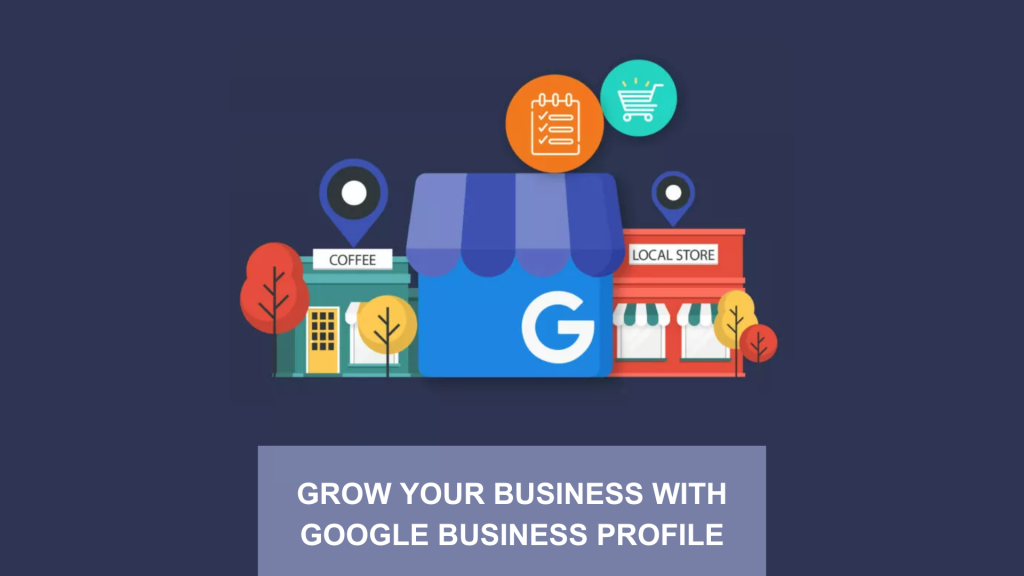
- GBP is the central interface customers use to evaluate a business: it showcases critical info like address, hours, contact, services, photos, reviews — essentially functioning as a mini-website inside Google.
- A fully optimized GBP drastically increases visibility. According to recent data, GBP optimization leads to significantly more clicks, calls, and direction requests from local searchers.
- GBP also builds trust and credibility. Accurate information, high-quality visuals, and positive reviews all contribute to perceived legitimacy — which matters especially when customers are choosing among multiple nearby options.
In short: GBP is not just a listing. It’s your local storefront, your first impression, your most direct pathway to conversion.
1.3 The Evolving Stakes: Why 2025–2026 Feels Different
The local search landscape is shifting — and fast. Several forces are converging to raise the stakes for GBP management and competition:
- AI-driven search and changing result formats: Modern search is increasingly influenced by artificial intelligence. As discussed by industry practitioners, AI changes how local results are surfaced, sometimes altering traditional “Local Pack + Map + Website” formats.
- More features, more user expectations: GBP continues to roll out features — from posts and photos/videos to performance analytics — raising the bar for what constitutes a “complete” listing in 2025.
- Increased competition in saturated local markets: As more businesses wake up to the power of local SEO, the competition for visibility — especially in dense metropolitan/suburban areas — intensifies. Standing out requires more than being present; it requires being strategic.
Given all this, the natural question emerges: if GBP is so critical and competitive, how do you ensure you don’t just show up — but stand out? The answer lies in competitor intelligence.
Section 2: What Is Competitor Intelligence in Local SEO — and Why It’s Critical
2.1 Defining Local SEO Competitor Intelligence
At its core, competitor intelligence in local SEO refers to systematically analyzing the Google Business Profiles (and broader local digital presence) of your direct competitors — the businesses that show up for the same local keywords, serve similar customers, or operate within your geographic market. This includes:
- Identifying who your true competitors are — not just those you know, but those ranking for your target local keywords in search results and maps.
- Analyzing how they structure their GBP — categories chosen, services listed, business description, photos, posts, response to reviews, frequency of updates, special features used, etc.
- Evaluating their performance — how many reviews they have, their average rating, engagement metrics (if inferable), how often they post, whether they use new features (like promotions, offers, photos, Q&A, etc.).
- Discovering gaps or weaknesses — what they’re not doing (e.g., missing photos, outdated info, poor review management) that you can exploit.
- Spotting opportunities and market gaps — services they don’t list, customer segments they may ignore, content types they underuse, or local queries they’re not targeting — giving you a path to differentiate.
This intelligence becomes a strategic asset — not just for keeping up, but for leading in the local search race.
2.2 Why Competitor Intelligence Matters Now, More Than Ever
- Local search competition is zero-sum: In many local markets, only a handful of businesses can occupy the top spots (e.g., Local Pack, top Map results). If you don’t understand what others are doing to get there, you’re essentially flying blind.
- Google’s algorithms increasingly reward completeness, recency, engagement and signals beyond just technical SEO: Profiles that are more active — regularly updated with posts, photos, offers — get favored. If competitors are doing that and you’re not, they’ll outpace you.
- Consumer expectations are rising: They expect up-to-date info, real photos, active businesses. If your competitor shows a vibrant, well-maintained GBP while yours is stale or incomplete, they win trust first.
- Better ROI for informed investment: Rather than guessing what works, competitor intelligence helps you invest your time and resources where they matter — in services, content types, UX, or listing optimizations that are proven to move the needle in your market.
Given how high the stakes are, competitor intelligence isn’t optional. It is a strategic necessity for any business that wants to survive — let alone thrive — in local search.
Section 3: How Local Search & Google Business Profile Are Changing — What’s New for 2025 and Beyond
Before diving into how to do competitor intelligence, it helps to understand what’s changing in local search and why GBP — and by extension, competitor monitoring — is more important than ever.
3.1 AI-Driven Search, New Formats & Dynamic Listings
- AI Overviews & Generative AI results: Search engines are increasingly using AI to summarize, highlight, and recommend businesses dynamically. According to recent guides, even with AI in play, GBP remains a key element surfaced by AI in local business recommendations.
- New result formats beyond Local Pack / 3-Pack: Some searches now surface “quads” or other variations, and Google appears to explore new ways of surfacing local businesses — including carousels, knowledge panels, and mixed AI-driven results.
- Richer multimedia & interactive features: GBPs are no longer just text and basic info; photos, videos, posts, special offers/events, user-generated photos, Q&A, service menus, “products” listings — these all influence visibility and user decision-making.
- Increasing weight on behavioral & engagement signals: Google seems to incorporate user interaction metrics — clicks, length of visit, direction requests — as signals of relevance and credibility in local search results.
Implication: Standing out requires more than just basic listing — you must treat GBP as a living asset, adapt to new formats and user behaviors, and continually optimize. Competitor intelligence helps you track which features and tactics are working right now — and which are behind the curve.
3.2 GBP Analytics & Performance Tracking Shift
- Google has revamped GBP analytics: The legacy “Insights” interface has been deprecated for many features; now, performance data and engagement metrics are more limited or accessible via API for some business profiles.
- This shift makes it harder for many small businesses to rely solely on Google’s native analytics; instead, there is value in third-party tools that provide more comprehensive data — including competitive benchmarking, historical tracking, and performance over time.
- Because of these changes, monitoring your own GBP’s performance is vital — but even more valuable is observing competitor patterns: frequency of updates, kinds of posts, types of engagement, visible signals (reviews, photos, recency) that you can externally observe.
3.3 Market Saturation & Increasing Local Competition
- As local SEO becomes more recognized as a high-value channel, more small and medium businesses invest in GBP optimization. This increases competition, especially in densely populated or service-heavy markets (restaurants, home services, retail, healthcare).
- For businesses operating in the same geographic area, differentiating based on services, content, reputation, and local relevance becomes critical. It’s no longer enough to just “be listed.”
- This saturation means that the margin for top-ranking placements shrinks — the difference between being in the Local Pack and being invisible can come down to small but strategic differences in profile optimization, reviews, content, service offerings, and user engagement.
Section 4: The Strategic Value of Competitor Intelligence — Business Benefits & ROI
In this section, we’ll explore what competitor intelligence unlocks for your business — the “why” behind the investment. It’s not just about spying on competitors; it’s about informed optimization, smarter investments, and sustainable local dominance.
4.1 Revealing What Actually Works in Your Market
Every local market is unique: customer preferences, competing businesses, search behavior, and even semantic searches vary by city or neighborhood. Competitor intelligence lets you:
- Reverse-engineer what’s working: If a competitor ranks high and has many reviews, you can analyze their GBP to see what they list — categories, services, business description, photos — and replicate or improve.
- See what customers respond to: For example, if a competitor frequently updates with “posts” or photos of real customers, products, or services, maybe that’s driving engagement. If another competitor has 100s of reviews, strong ratings, and many direction requests, that signals trust and popularity.
- Inform service or product adjustments: Maybe your competitor lists a niche service you don’t offer, but that seems to resonate locally. Or maybe they advertise a service via GBP that you don’t — highlighting a possible gap in the market.
This insight gives you empirical, market-specific data rather than generic “best practices.”
4.2 Spotting — and Exploiting — Gaps & Weaknesses
Competitor intelligence shines brightest not when you copy what they do, but when you identify what they don’t do — and use that to differentiate. For example:
- A competitor may have a basic GBP: simple description, no photos, few reviews — indicating a stale or poorly managed listing. Updating and optimizing your own GBP could give you a relatively easy competitive advantage.
- Competitors might neglect certain GBP features — e.g., posts, “products,” Q&A, service menus, updated hours, seasonal offers — leaving room for you to stand out by proactively using them.
- There may be underserved sub-segments: maybe no competitor serves a niche neighborhood, offers a specific service, or targets a particular demographic. Your competitor analysis could uncover opportunities to fill gaps, tailor offerings, or localize content accordingly.
In many local markets, exploiting these gaps can result in outsized returns because the barrier to entry (GBP optimization) is low.
4.3 Better Resource Allocation & Smarter Local SEO Strategy
Rather than guessing what will work, competitor intelligence enables data-driven decision making:
- You can prioritize which services to highlight, which content types to create (photos, posts, videos), how often to update, what reviews or social proof to solicit.
- You can monitor competitor activity over time — frequency of updates, new features used, changes in ratings — to know when to respond or adapt.
- You can benchmark yourself against top local players, track your growth, and set measurable goals (e.g., “increase review count by X,” “post at least weekly,” “capture Y% of local pack appearances”).
Ultimately, that leads to better ROI: you invest your time and marketing dollars where they are most likely to move the needle, instead of chasing one-size-fits-all SEO checklists.
4.4 Maintaining Long-Term Competitive Advantage
Local SEO is not static — what works today might not work tomorrow. The businesses that stay ahead are the ones that keep evolving, stay aware of competitor moves, and adapt proactively.
Competitor intelligence, done continuously, gives you a feedback loop: watch what works, implement, measure, iterate.
- It helps you foresee threats: maybe a competitor started a promotion or added a new service; if you’re not aware, you could lose share.
- It helps you stay relevant and fresh: by adopting new GBP features, updating content, encouraging reviews — while others remain stale.
- It gives you defensibility: once you occupy a top position in local search with a well-maintained GBP, it’s harder for latecomers to outcompete you.
In short: competitor intelligence is not a one-off task — it’s a strategic, ongoing investment in sustaining local dominance.
Section 5: How to Conduct Competitor Intelligence on Google Business Profiles — A Step-by-Step Workflow
In this section, we’ll walk through a detailed, actionable workflow for conducting competitor intelligence for local SEO via GBP — from identification to analysis to action and optimization.
5.1 Step 1: Identify Your Local Competitors
Start by defining who you’re competing against in your geographic area and niche. Consider:
- Businesses appearing in the “Local Pack” or top map results for your target keywords.
- Businesses with similar services, offerings, or customer segments within your city/neighborhood.
- New or emerging businesses — sometimes smaller or newer businesses can be agile and gain traction quickly.
Use tools like local rank trackers, map-based SEO tools, or manual Google Maps/Google Search queries to compile a list. Experts recommend starting with the top 5–10 competitors in your area.
5.2 Step 2: Snapshot & Audit Their Google Business Profiles
For each competitor, gather data on:
- Profile completeness: categories, services listed, business description, hours, business name consistency, contact info, website link.
- Visual assets: number and quality of photos, presence of videos, types of images (inside business, products, customers, signage).
- Engagement signals: number of reviews, average rating, frequency of new reviews, responsiveness (do they reply?), how recent the last reviews are.
- Content activity: presence of posts, updates, offers/events, “products” listings, Q&A usage, special features (menus, service lists, booking links, etc.).
- Service or offering breadth and uniqueness: what services they mention, whether they specialize in anything niche, how their service descriptions are phrased.
Use spreadsheets, manual screenshots, or third-party tools to track these metrics.
5.3 Step 3: Benchmark & Compare — Score or Grade Competitors vs. Your Own GBP
Create a competitor-benchmark matrix. For example:
| Competitor | Profile Completeness | Photos / Visuals | Reviews & Ratings | Content Activity (Posts, Specials) | Unique Services / Offerings | Overall Strength / Weakness (1–5) |
| Business A | ✅ Complete | High-quality photos | 150 reviews, 4.6★ | Weekly posts, specials | Niche service X | 4.5 |
| Business B | ✅ Complete | Few photos / old | 45 reviews, 4.2★ | No posts | Basic offerings | 2.8 |
| Your Business | — | — | — | — | — | — |
This allows you to visually spot where you stand, what needs immediate action, and where you can differentiate.
5.4 Step 4: Identify Gaps & Opportunities
With the benchmark matrix in hand, conduct a gap analysis:
- Where do competitors consistently underperform (e.g., lack of visuals, poor review volume, rare updates)?
- What services or keywords are underserved locally — can you introduce offerings that meet those needs?
- Are there content or feature opportunities (e.g., regular posts, seasonal promotions, service bundles) no one is using effectively?
- Can you differentiate via niche services, better customer experience, or more robust GBP content?
Form a prioritized action list — starting with the lowest-hanging fruit (e.g., complete profile information, add photos) to more advanced strategies (e.g., specialized services, content calendar, review generation campaigns).
5.5 Step 5: Implement — Optimize Your GBP & Local SEO Strategy Based on Insights
Use your findings to optimize your own GBP:
- Ensure 100% profile completeness — accurate NAP (name, address, phone), categories, business description, operating hours, website link, services.
- Add high-quality, relevant photos and videos — including interior/exterior shots, products/services, team/staff, customers (with permission), signage — to match or exceed competitor visuals.
- Build a content calendar: schedule regular posts or updates (special offers, seasonal deals, behind-the-scenes, events, promotions) via GBP Posts or “products/services” listings. This signals freshness and engagement.
- Encourage reviews and manage reputation: request reviews from satisfied customers, respond quickly and professionally to reviews (positive and negative), and aim for a high average rating. Reputation remains a trust signal for locals.
- Consider niche services or unique offerings that competitors lack — perhaps a specialized product, bundle, or service aimed at an underserved segment.
5.6 Step 6: Monitor & Iterate — Competitor Intelligence as Ongoing Practice
Competitor intelligence isn’t a “set and forget” task — it’s an ongoing process.
- Periodically (monthly or quarterly) revisit competitor GBPs to note changes: new services, updated descriptions, new photos, changes in review volume or ratings, posting frequency.
- Maintain your own GBP health: keep info updated, post consistently, keep visual and content assets fresh.
- Track performance metrics if possible: website clicks, calls, direction requests, bookings — either via GBP Performance API (or third-party dashboards) or indirect attribution (surveys, manual tracking). This helps measure ROI and refine strategy.
- Use competitor intelligence insights to inform offline business decisions too: pricing, service offerings, customer experience upgrades, local partnerships, marketing campaigns.
Section 6: Common Pitfalls & How to Avoid Them
Just performing competitor analysis isn’t enough — doing it wrong can lead to wasted efforts, or worse, misdirected strategies. Here are common mistakes and how to avoid them.
6.1 Treating GBP Like a “Set it and Forget it” Asset
Pitfall: Many business owners claim their GBP, fill it out once, and never update again. Over time, information becomes outdated; photos remain stale; no new content or reviews — leading to a stale presence.
Why it hurts: Modern local search algorithms reward freshness, relevance, engagement, and recency. A stagnant profile sends the signal that the business might be closed, inactive, or unengaged.
How to avoid: Treat GBP like a living part of your business presence. Schedule regular reviews/updates. Maintain a content calendar (posts, photos, offers). Respond to reviews promptly.
6.2 Treating Competitor Intelligence as a One-Time Audit
Pitfall: Doing competitor analysis once and assuming conditions remain static.
Why it hurts: Competitors evolve — they change services, update profiles, launch promotions — and the competitive landscape shifts. Without continuous tracking, you may miss threats or opportunities.
How to avoid: Build a recurring process (monthly/quarterly) to revisit competitor profiles and update your benchmark matrix.
6.3 Over-Copying Competitors Without Differentiation
Pitfall: Blindly copying what competitors do — e.g., same categories, similar photos, service wording — without owning a unique voice or differentiator.
Why it hurts: If everyone looks the same, none stands out. You end up in a “race to the bottom” or a commoditized clutter, which reduces click-through rate (CTR) and conversion potential.
How to avoid: Use competitor intelligence to identify gaps, but complement with your own unique value propositions (niche services, brand voice, local community involvement, additional offerings).
6.4 Relying Solely on GBP & Ignoring Other Local Signals
Pitfall: Thinking GBP alone is enough.
Why it hurts: While GBP is central, local search also involves other signals: your website, backlinks (local citations), local content, social media presence, local mentions, community involvement. Ignoring those reduces overall visibility.
How to avoid: Use GBP as the core, but integrate with a broader local SEO strategy: local citations, website optimization, geo-targeted content, community engagement, local backlinks, and reviews across platforms.
Section 7: Advanced Strategies — Using Technology & Tools for Scalable Competitor Intelligence
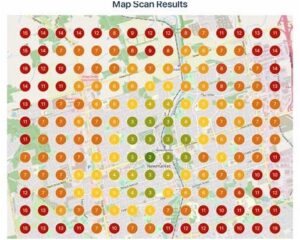
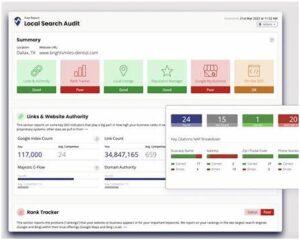
As local search gets more complex and competitive, manual GBP audits may not cut it, especially if you operate multiple locations or serve a broader region. Here’s how to scale competitor intelligence using modern tools and advanced tactics.
7.1 Third-Party GBP Analysis & Competitor Tracking Tools
Several specialized tools beyond Google’s native dashboard provide powerful competitor-tracking capabilities, historical data, and actionable insights. These include (but are not limited to) platforms referenced by recent local-SEO industry rundowns.
What they offer:
- Batch audits of multiple GBPs: check completeness, consistency, NAP, categories, etc.
- Historical data and trend tracking (over 12–18+ months) — useful to monitor how competitor GBP’s have evolved over time.
- Competitive benchmarking: see where you stand relative to top performers in your market (rankings, reviews, content frequency, presence of special features).
- Alerts and monitoring: notifications for when competitors update their profile (e.g. new photos, new services, new reviews), so you can respond or adapt proactively.
- Workflow integrations: some enterprise-level tools help manage multiple locations, compare across regions, and centralize optimization efforts.
Using these tools can save time, provide richer insights than manual audits, and enable data-driven decision-making at scale.
7.2 Connecting GBP Strategy with Broader Local SEO & Brand Building
Competitor intelligence should not exist in isolation. Use the insights to inform a full-spectrum local marketing strategy:
- Geo-targeted content and local website optimization: If competitor GBP analysis reveals underserved neighborhoods or services, create localized landing pages or content targeting those areas.
- Backlinks, local citations, and local authority building: Combine GBP optimization with efforts to get citations on local directories, local news sites, community portals, and relevant local hubs — building “prominence,” a known local ranking factor.
- Reputation & review management across platforms: While GBP reviews are critical, reviews and presence on other local directories, social media, and niche platforms help widen your footprint and reinforce trust.
- Local community engagement, brand-building, and offline-online synergy: Local SEO is not just technical; reputation, brand recognition, and real-world presence (sponsorships, events, partnerships) increasingly matter — especially as search evolves to reward local prominence.
By integrating competitor intelligence into a holistic local marketing strategy, you create a defensible, multi-channel presence — not just a single, fragile point of visibility.
Section 8: Scenario Examples — How Competitor Intelligence Can Reveal Surprising Opportunities
To make this concrete, let’s walk through three hypothetical but realistic scenarios where competitor intelligence reveals opportunities you might have overlooked.
Scenario A: The Underserved Niche Service
Business Type: Local home-services company (e.g., HVAC or plumbing) in a mid-size city.
Competitor Intelligence Reveals: Among top-ranking competitors, none highlight a specialized offering — say, “eco-friendly solutions,” “24/7 emergency service,” or “financing / payment plans.” Their GBPs are generic, with basic service listings and few photos.
Opportunity & Action: You can optimize your GBP to highlight those niche services, with a clear, benefit-focused description, photos showing before/after, customer stories, etc. You may gain visibility from searchers specifically looking for those niche services — capturing a segment no one else serves.
Scenario B: The Visual & Content Advantage
Business Type: Restaurant, retail store, or any experience-driven business.
Competitor Intelligence Reveals: Competitors have minimal or outdated photos; few use posts or specials; reviews are average and infrequent. Their GBP is static.
Opportunity & Action: Invest in high-quality photos/videos (interior, products, staff, happy customers), set up a content calendar for “special of the day/week,” behind-the-scenes posts, promotions, seasonal offers. This could significantly improve engagement and draw attention, making your GBP more attractive to potential customers scrolling through options.
Scenario C: Reputation & Reviews Gap
Business Type: Professional services (e.g., dentist, salon, legal, consultants).
Competitor Intelligence Reveals: Competitors have only a handful of reviews, some old, with average ratings. They rarely respond to reviews or engage with customers publicly.
Opportunity & Action: Launch a review generation campaign — ask satisfied clients to leave reviews, respond to each review (including negative ones), showcase testimonials, and maybe add case studies or service highlights in posts. Over time, you build stronger social proof → higher trust → more conversions.
These scenarios illustrate that intelligent, thoughtful optimization guided by what competitors do (or don’t do) can be a game-changer — especially in crowded local markets.
Section 9: What the Future Holds — Trends & Predictions for Local Search, GBP & Competitor Intelligence
Given the evolving landscape, here are predictions and emerging trends for local search, and why competitor intelligence will only grow in importance.
9.1 More AI, More Personalization, More Complexity — GBP Goes Mainstream
- As AI-driven search engines become more advanced and widespread, local search results will become more personalized: algorithms may surface businesses not only based on proximity, but based on user preferences, past behavior, local popularity, and engagement patterns. This makes a well-optimized, active GBP even more valuable as a signal of legitimacy and relevance.
- Local search result formats will continue to evolve: augmented reality (AR) integration, virtual tours, interactive menus, “products/services” carousels, AI-powered recommendations — businesses with richer, more complete GBP content will fare better.
Because of this, businesses that rely on outdated or minimal GBP presence will increasingly underperform. Competitor intelligence becomes essential to stay current, understand what features are being adopted, and adapt quickly.
9.2 Ongoing Shift from Traffic to Conversions — From Views to Actions
- As GBP analytics evolve (with Performance APIs replacing older Insights), the focus will shift more toward measurable outcomes — clicks to website, calls, direction requests, bookings — rather than just visibility.
- In that context, competitor intelligence helps you monitor not just what others show publicly, but infer which GBP elements may drive real customer actions (e.g., frequent posts, service listings, updated hours, many reviews).
Your challenge: not just to get eyes, but to convert eyes into action — and to do that faster and better than competitors.
9.3 Increasing Importance of Local Reputation, Authority & Community Presence
- As search algorithms prioritize “prominence” — local authority, trustworthiness, relevance — local businesses will benefit more from community engagement: local backlinks, local citations, mentions in local media, partnerships, events.
- Competitor intelligence will expand beyond GBP: you’ll want to monitor where competitors get local citations, community mentions, backlinks, social mentions — to gauge their offline + online influence.
In many cases, local brands that build real-world community presence + strong GBP + consistent local content will dominate over businesses that rely solely on technical SEO or paid search.
9.4 Greater Need for Scalability & Automation — Tools Will Matter
- As businesses manage multiple locations, or as local markets become denser, manually monitoring competitor GBPs becomes untenable. Third-party tools offering automation, alerts, benchmarking, historical data — will become indispensable.
- Data-driven decision making will separate the winners: those who leverage competitor intelligence via tools + manual analysis will adapt faster, optimize smarter, and capture local dominance.
Section 10: Practical Recommendations — How to Get Started (Your Roadmap)
If you’re convinced of the importance of competitor intelligence for local search — here’s a practical 90-day roadmap to get started (or ramp up) for your business.
10.1 First 30 Days: Audit & Baseline
- Claim and verify your Google Business Profile (if not already done). Make sure NAP (Name, Address, Phone) is accurate and consistent across all platforms.
- Complete all GBP fields: categories (primary + secondary), business description, services, hours, website, contact info, business description, etc.
- Take or procure high-quality photos/videos: interior, exterior, products, staff, work examples; upload them.
- Identify top 5–10 local competitors via Google Search and Maps for your key search terms.
10.2 Next 30 Days: Competitor Snapshot & Benchmarking
- For each competitor, capture a full snapshot of their GBP (profile info, photos, services, reviews, content activity).
- Build a benchmark matrix — comparing your profile against competitors across key dimensions (completeness, visuals, engagement, services, content activity).
- Identify gaps: where competitors are weak, or where no one is serving a niche or local segment.
10.3 Next 30 Days: Optimize & Differentiate
- Based on your gap analysis, optimize your GBP: add missing information, photos, service offerings, content posts; correct any inconsistencies.
- Develop a content calendar for GBP — plan regular posts (e.g., weekly): new services, specials, seasonal offerings, behind-the-scenes, customer stories, promotions.
- Encourage reviews and manage reputation: ask satisfied customers, respond to all reviews professionally, manage negative feedback with care and transparency.
- Monitor your GBP performance (if possible) — track calls, direction requests, website clicks, bookings — to measure initial impact.
10.4 Ongoing: Competitor Intelligence as a Habit + Continuous Improvement
- Set a recurring schedule (e.g., monthly or quarterly) to review competitor GBPs — update your benchmark matrix, capture changes or new entrants.
- Adjust your GBP and local SEO strategy based on what you observe: new services, features, content types competitors use; community events; customer reviews; changes in local demand.
- Expand your competitive tracking beyond GBP: monitor local citations, backlinks, local media coverage, community presence, social media mentions.
- If you manage multiple locations or plan to scale, consider investing in dedicated third-party tools for GBP audits, competitor tracking, ranking monitoring, and automation.
Section 11: Conclusion — Competitor Intelligence Is Not Optional, It’s Strategic
Local search is no longer a passive channel. It is a dynamic, competitive battleground — shaped by AI-driven search algorithms, evolving user behavior, increasing expectations for quality and trust, and tight competition in local markets. In this environment, simply having a presence on GBP is not enough.
Competitor intelligence — the systematic, ongoing analysis of what others in your local market are doing — is no longer a nice-to-have. It’s strategic, essential, and urgent.
By adopting competitor intelligence as part of your local SEO workflow, you gain market-specific insight: what customers in your area respond to, where unmet needs exist, how to differentiate, and how to optimize for conversions over mere visibility.
In doing so, you don’t just chase the Local Pack — you build a defensible, evolving, long-term local presence.
If you treat GBP as your storefront, competitor intelligence is your market research and business strategy — all rolled into one.
IMAGES TO INCLUDE FOR EACH SECTION
Introduction
In an era where more customers search online before visiting a business, local search has become the battleground where small businesses, regional players, and national chains fight for visibility…
Section 1: Why Local Search & Google Business Profile Still Matter (and Growing)
1.1 The Rise of Local Search: Consumer Behavior Trends
High-intent, location-based searches are rising…
Mobile-first behavior dominates…
Local purchases often happen quickly…
1.2 Google Business Profile: The Digital Storefront & Decision Hub
GBP is the central interface customers use to evaluate a business…
1.3 The Evolving Stakes: Why 2025–2026 Feels Different
AI-driven search…
New features…
Growing competition…
Section 2: What Is Competitor Intelligence in Local SEO — and Why It’s Critical
2.1 Defining Local SEO Competitor Intelligence
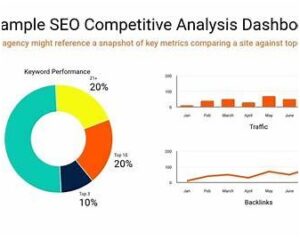
Competitor intelligence includes identifying true keyword competitors, analyzing profile structure, evaluating review strength, etc.
2.2 Why Competitor Intelligence Matters More Than Ever
Local search is zero-sum…
Google rewards recency and completeness…
Consumer expectations rise…
Section 3: How Local Search & GBP Are Changing — What’s New for 2025 and Beyond
3.1 AI-Driven Search, New Formats & Dynamic Listings
AI Overviews…
New result formats…
Richer multimedia…
3.2 GBP Analytics & Performance Tracking Shift
Google has revamped performance tracking…
3.3 Market Saturation & Increasing Local Competition
As more businesses optimize for GBP, competition grows…
Section 4: The Strategic Value of Competitor Intelligence — Business Benefits & ROI
4.1 Revealing What Actually Works in Your Market
Reverse-engineer what’s working…
4.2 Spotting — and Exploiting — Gaps & Weaknesses
Competitors often leave exploitable gaps…
4.3 Better Resource Allocation & Smarter Strategy
Data → smarter decisions → higher ROI.
Section 5: How to Conduct Competitor Intelligence — Step-by-Step Workflow
5.1 Step 1: Identify Your Local Competitors
Find true search competitors…
5.2 Step 2: Snapshot & Audit Their GBPs
Audit categories, visuals, reviews, posts, and more.
5.3 Step 3: Benchmark & Compare
Use a matrix to visualize strengths and weaknesses.
5.4 Step 4: Identify Gaps & Opportunities
Spot missing services, weak content, or low reviews.
5.5 Step 5: Implement & Optimize
Improve visuals, content, reviews, NAP consistency, etc.
5.6 Step 6: Monitor & Iterate
Make competitor tracking a monthly habit.
Section 6: Common Pitfalls & How to Avoid Them


Examples: “Set and forget,” one-time audits, copying competitors, etc.
Section 7: Advanced Strategies — Tools & Tech for Scalable Competitor Intelligence
Third-party tools make large-scale monitoring possible.
Section 8: Scenario Examples — Realistic Opportunities Competitor Intelligence Reveals
Scenario A — Niche Services
Scenario B — Visual/Content Advantage
Scenario C — Review/Reputation Gap
Concrete examples highlight real strategic wins.
Section 9: The Future of Local Search — Trends & Predictions
AI, personalization, conversion tracking, authority signals…
Section 10: Practical Recommendations — 90-Day Roadmap
A structured plan for baseline → benchmarking → optimization → continuous monitoring.
Section 11: Conclusion
Competitor intelligence is no longer optional — it’s strategic.