






Introduction
In today’s digital age, nearly every consumer uses search engines — especially Google Business Profile (GBP) — to discover and connect with local businesses. For brick-and-mortar shops, service providers, restaurants, and multi-location enterprises alike, local SEO can make or break visibility. A foundational yet often overlooked part of local SEO is ensuring that your business’s core identifying information — name, address, and phone number (NAP) — remains consistent across the web.
Why does this matter? Because search engines like Google treat NAP data as a trust signal: it helps confirm that listings across directories, review sites, and maps all point to the same legitimate business. Small discrepancies — “St.” vs “Street,” “Suite 5” vs “#5,” local number vs toll-free — may seem trivial, but they can erode your local SEO authority.
In this article we’ll dive deep: what NAP consistency means, why it matters, how you can audit and optimize it, how it interacts with your Google Business Profile and local citations, and strategies for ongoing maintenance. Think of it as a master guide for stabilizing your local SEO foundation so you can build higher.
- What Is NAP — and Why It Matters
1.1 Defining NAP and NAP Consistency
- NAP stands for Name, Address, Phone number — the basic identifying information of a business that uniquely distinguishes it in the real world and online.
- NAP Consistency means that this Name, Address, and Phone number are represented identically across every online platform where your business appears: your website (footer, contact page), your Google Business Profile, local directories (Yelp, Yellow Pages, etc.), review sites, social media profiles, industry listings, press mentions, and even unstructured citations (blogs, local news, forums).
- The reason for identical representation extends beyond semantics: search engines treat the string of NAP data — not just the meaning — as a unique identifier. Even minor formatting differences (“St.” vs “Street,” “123-456-7890” vs “(123) 456 7890”) can be interpreted as different businesses.
1.2 The Logic Behind NAP Consistency: Building a Digital Footprint
Think of NAP consistency as building a sturdy, interconnected web of citations — each one a vote of confidence that your business is real, static, and trustworthy. These citations span:
- Structured directories (Yelp, BBB, Yellow Pages, niche industry directories)
- Social media business pages
- Review platforms
- Your own website (contact page, footer, schema markup)
- Unstructured mentions (local news, blog posts, guest articles)
When these citations all align, search engines more confidently tie them to a single entity — your business. When they diverge, your authority becomes fragmented or flagged as inconsistent.
From a user perspective, consistency builds trust: customers expect accurate contact details, and frustration from incorrect phone numbers or outdated addresses can lead to lost leads and damaged reputation.
- How NAP Consistency Influences Local SEO & Google Business Profile Visibility
2.1 The Role of Citations and Local Search Algorithms
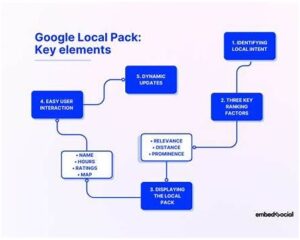
Local search algorithms — such as the mechanisms behind Google’s “Local Pack” or Maps results — rely on three core criteria: relevance, distance, and prominence.
- Relevance — how closely a business matches the user’s query (service type, category, keywords)
- Distance — how geographically close the business is to the user’s location or search intent
- Prominence — how well-known or authoritative the business appears through signals like reviews, backlinks, and citations
NAP consistency plays directly into prominence. Consistent NAP across many high-quality directories and platforms signals to Google that your business is established, legitimate, and widely recognized.
Moreover, citations — even when they don’t link back to your website — are considered when evaluating local relevance and prominence.
2.2 Avoiding Duplicate Listings and Data Fragmentation
Inconsistent NAP data often leads to duplicate listings — where a business appears multiple times under slightly different names or addresses. This can split reviews, citations, and even search equity between separate “entities.” That fragmentation dilutes SEO power and may confuse users.
For example: one listing might say “John’s Plumbing, 123 Main St., Springfield, IL,” and another “Johns Plumbing, 123 Main Street, Springfield IL 62704.” Though obviously the same business in real life, search engines may treat them as two different entities — or question their legitimacy.
2.3 User Experience and Conversion Impact
Beyond search engine rankings, NAP consistency directly impacts user experience:
- Users expect accurate phone numbers and addresses — inconsistencies lead to wrong calls, missed opportunities, or frustration. In some cases, customers might abandon the attempt to contact the business.
- Consistent NAP across website, GBP, and directories fosters trust and professionalism — which can influence a customer’s decision to call, visit, or engage.
- In local markets, first impressions often come via GBP — if that is complete, accurate, and matches other presences, customers are more likely to convert.
2.4 Why NAP Consistency is More Important Than Ever (2025 & Beyond)
With the rising reliance on mobile search, voice assistants, and AI-driven local search, structured and accurate data becomes increasingly critical. People often perform searches like “dentist near me,” “best pizza close by,” or “hardware store open now,” expecting near-instant access to contact data, directions, and hours. For these scenarios, search engines and AI assistants lean heavily on NAP citations to deliver results.
What’s more, as local markets become more competitive and more businesses optimize GBP and local citations, inconsistent NAP is less forgivable. Think of NAP consistency as the floor — without it, you may not even be considered for the “Local Pack,” no matter how good your reviews or site content are.
- Common NAP Mistakes & How They Hurt Your SEO
Here are some of the most common NAP-related pitfalls businesses fall into, and why each can be damaging:
| Mistake | Why It Hurts |
| Name variations — e.g., “My Business, LLC” vs “My Business” vs “My Business LLC.” Or adding keywords (“My Business – Best Roofing”). | Causes search engines to treat them as separate entities, splitting citations and reducing authority. |
| Address formatting inconsistencies — e.g., “123 Main St.” vs “123 Main Street,” “Suite 500” vs “#500”, or city formatting differences. | Even tiny variations can be parsed as different addresses. This can fragment citations or cause Google to be uncertain about which listing reflects the accurate location. |
| Phone number mismatch or format differences — e.g., local number in one listing, toll-free in another; missing area code; different punctuation or spacing. | Leads to mixed signals about your primary contact line; duplicates or invalid data may reduce trust or confuse users. |
| Using acronyms, abbreviations, or unnecessary keywords in name — “Best Dentist Clinic” instead of actual brand name. | Keyword-stuffed names may violate GBP guidelines and erode trust; inconsistent naming also fragments brand identity. |
| Multiple or outdated phone numbers/addresses across directories — especially after relocation, rebranding, or mergers. | Confuses search engines and users; may create leftover outdated listings that damage authority. |
| No central “source of truth” for NAP — different listings maintained by different people/departments | Changes happen inconsistently; updates are partial; risk of divergence increases over time. |
Even if you have great content, quality reviews, or strong backlinks — inconsistent NAP can undercut all of that. It’s like building a skyscraper on shifting sand rather than a stable foundation.
- How to Audit, Standardize, and Optimize NAP — Step-by-Step Workflow
Here’s a practical, detailed workflow you can follow to audit your NAP data and optimize it across all relevant platforms:
Step 1: Establish Your “Source of Truth”
- Decide on the exact spelling and formatting of your business name, address, and phone number.
- Use this canonical NAP everywhere — on your website (footer, contact page), and in your primary GBP listing.
- Use consistent punctuation, abbreviations vs full words (e.g., “Street” vs “St.”), suite formatting, area codes, etc.
Tip: Document your canonical NAP in a simple living document (Google Sheet, Notion, etc.), and treat it as the official reference going forward.
Step 2: List Out All Existing Citations and Mentions
- Use Google to search for “Your Business Name” + “Phone Number” to find all existing mentions.
- Compile results into a spreadsheet: columns for URL, listing type (directory, citation, social, review site, etc.), and a column to note whether NAP exactly matches.
- Don’t forget lesser-known directories, industry-specific listings, and unstructured mentions (blogs, guest posts, press).
Step 3: Prioritize Key/High-Impact Listings
Not all citations are equally valuable. Prioritize based on:
- High-authority platforms (e.g., GBP, major directories like Yelp, Apple Maps, Bing Places)
- Sites with high local visibility / traffic
- Listings with incorrect data that could mislead customers
Once you fix major ones, you can work through lower-impact ones.
Step 4: Update and Standardize Inconsistencies
- For each listing, log in (or claim if unclaimed) and update the NAP to match your canonical version.
- For duplicates: delete, merge, or mark as closed — whichever maintains the strongest existing reviews and authority.
- For unstructured mentions (like blog posts or articles), reach out to authors or sites to request corrections if possible.
Step 5: Use Tools to Automate Monitoring & Maintenance
Manually maintaining NAP across dozens of platforms is tedious. Some tools and services make this easier:
- BrightLocal — helps track citations across multiple directories and monitor consistency.
- Moz Local — useful for distributing and syncing NAP data across major aggregators.
- Yext — especially helpful for multi-location businesses that need centralized listing management.
Set recurring audits (quarterly or bi-annually) to catch any drift before it becomes a problem.
Step 6: Reinforce With Structured Data & On-Site NAP
- On your website, include your NAP in the contact page and footer.
- Use structured data (e.g., Local Business schema) to mark up your business info — this helps search engines parse and match NAP more precisely.
- Optionally embed a map (e.g., Google Map) to reinforce geolocation consistency.
- Integrating NAP Consistency with Google Business Profile Optimization
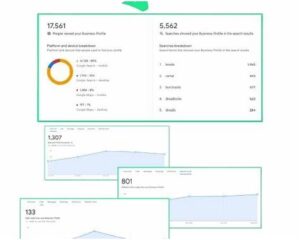

The role of NAP consistency becomes especially critical when optimizing your Google Business Profile (GBP) — arguably the most visible and conversion-driving local asset. Here’s how NAP consistency intersects with broader GBP optimization efforts:
5.1 GBP as Your Primary Local SEO Asset
As many guides emphasize, your GBP often serves as the first public impression of your business. When optimized, it can significantly boost visibility, engagement, and conversions (calls, directions, website visits).
Key GBP optimization factors include: accurate NAP, proper categories, business description, photos/videos, business hours, review management, and regular engagement.
NAP consistency underpins all of this — if your core business info isn’t clean, other optimizations won’t hold.
5.2 Avoiding GBP Conflicts, Duplicates, or Drops in Ranking
Inconsistent NAP can trigger issues like duplicate GBP listings, conflicting data, or even de-indexing of your profile. Given how much real estate GBP occupies (especially in the “Local Pack”), such errors can have serious consequences.
Ensuring GBP NAP exactly matches your website and other citations helps align all signals and reinforces to Google that your listing is legitimate, stable, and authoritative.
5.3 Supporting GBP with Robust Citation Network
NAP consistency across social media, directories, review sites, and your website helps build a robust citation network — which in turn supports your GBP prominence and local ranking potential.
Moreover, a rich citation network mitigates reliance on a single channel: even if GBP visibility fluctuates, consistent citations across the web uphold your local presence.
5.4 GBP as a Control Center: Strategy for Updates & Growth
Treat GBP as your “control center” for local SEO. When business information changes (address moves, phone number updates, rebranding), update the canonical NAP first — then propagate changes systematically across all citations and directories.
Pair NAP updates with other GBP enhancements: updated photos, fresh business descriptions, updated service categories, hours, and request customer reviews. This gives Google multiple fresh signals — cementing relevance and authority.
- Advanced Strategies & Best Practices

Here are more advanced tactics and strategic recommendations that go beyond the basics — ideal for businesses serious about dominating their local market or managing multiple locations.
6.1 Use Automated Tools & Dashboards for Ongoing Management
- Use listing management platforms (e.g., BrightLocal, Moz Local, Yext) to monitor your citations and catch inconsistent NAP entries.
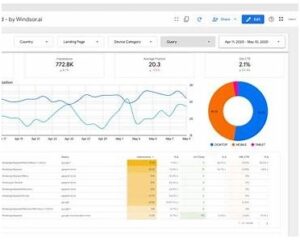
- Build a dashboard (for example using Google Data Studio or similar) to track metrics like: number of listings, percentage with consistent NAP, impressions/clicks from GBP, calls, directions — so you can measure the impact of cleaning up and maintaining NAP.
- Set a schedule (quarterly or bi-annual) to audit all citations, especially after business changes (new address, rebrand), to avoid drift.
6.2 Schema Markup & Technical On-Site SEO to Reinforce NAP
Applying structured data (Local Business schema) on your website helps search engines “read” your NAP more precisely and match it to other citations. This reduces risk of misinterpretation due to formatting differences.
Embedding a map (e.g., Google Map with pin) reinforces geo-coordinates. For businesses with multiple locations, this becomes even more critical to avoid confusion.
6.3 Combining NAP Consistency with Other Local SEO Signals
NAP is foundational — but for maximum impact, combine it with other signals:
- Reviews & Ratings: High-quality, recent reviews build social proof and trust.
- Photos & Videos: Regular, relevant photos (storefront, team, products) engage users and support GBP optimization.
- Relevant Categories & Keywords: Choose precise primary and secondary categories in GBP; avoid stuffing business name with keywords (violates guidelines).
- Engagement & Activity: Posting updates, offers, FAQs, responding to reviews — activity signals can boost GBP prominence.
Together, these create a networked ecosystem: NAP consistency provides the stable foundation, while other signals build authority, relevance, and engagement.
6.4 Special Considerations for Multi-Location or Franchise Businesses
Managing multiple locations requires extra discipline:
- Maintain a separate canonical NAP per location (name, address, phone).
- Use centralized tools (like Yext) or internal management systems to propagate updates across all listings simultaneously.
- Assign responsibility — someone (or a team) should “own” local listing management, to avoid mismatched entries when changes occur (new branch, relocation, rebrand).
- Implement automated audits and reporting for each location to ensure ongoing compliance and consistency.
6.5 Future-Proofing for AI, Voice Search, and Evolving Local Search Dynamics
As search evolves — with more voice queries, AI-powered assistants, and predictive search — clean structured data becomes essential. Inaccurate or inconsistent NAP may lead to invisibility in voice results or local recommendations.
Treat NAP as a living entity, not a one-time setup. Regular maintenance will pay long-term dividends.
- Real-World Example / Case Study: Before & After NAP Cleanup
(Note: This is a hypothetical/illustrative example combining best practices.)
Business: “GreenLeaf Landscaping,” a small landscaping company based in Springfield, IL.
Problem (Before): Over the years, GreenLeaf had accumulated multiple citations:
- On directory A: “GreenLeaf Landscaping, 456 Oak St., Springfield, IL 62704, (217) 555-1234”
- On directory B: “Green Leaf Landscaping, 456 Oak Street, Springfield, Illinois, 217-555-1234”
- On an old review site: “GreenLeaf Landscaping, 456 Oak St., Ste. 200, Springfield, IL”
- On social profile: “GreenLeafLandscape, 456 Oak St, Springfield, IL 62704, +1 2175551234”
Because of variation in spacing, “Street” vs “St.,” suite vs no suite, and phone number formatting, the business had multiple “virtual duplicates.” As a result:
- Their GBP occasionally showed conflicting info — sometimes suite number, sometimes not.
- Calls and customer visits were misrouted or confused.
- Their local citations were diluted — some reviews and citations pointed to “Green Leaf Landscaping,” others to “GreenLeaf Landscaping,” confusing search engines.
- They were not ranking in the “Local Pack” for many relevant queries, despite having decent reviews and backlinks.
Solution:
- Established canonical NAP:
- Name: “GreenLeaf Landscaping”
- Address: “456 Oak Street, Springfield, IL 62704”
- Phone: “(217) 555-1234”
- Compiled full list of citations (directories, social profiles, review sites) — 42 in total.
- Prioritized high-authority listings; claimed or merged duplicates; updated all NAP info.
- Added LocalBusiness schema on their website; embedded a Google Map.
- Set a quarterly audit schedule to monitor new listings and maintain consistency.
Results (6 months after cleanup):
- GBP map-pack impressions: ↑ 62%
- Phone calls via GBP: ↑ 48%
- Average customer reviews consolidated to a single listing (better social proof)
- Number of listings with consistent NAP: 100% (from ~65%)
- More accurate direction/submission requests — fewer misrouted calls or messages
This hypothetical but realistic example shows how NAP cleanup — though fundamental — can significantly improve local visibility and real-world conversions.
- Common Questions & Myths About NAP Consistency
| Question / Myth | Reality / Answer |
| “Is exact formatting really necessary? Doesn’t Google smartly recognize ‘St.’ vs ‘Street’?” | While search engines have become better at context and equivalence — some variations may be accepted — relying on that is risky. Many SEO experts still recommend exact consistency because structured data is often parsed literally. |
| “I have great reviews and backlinks — do I really need to care about NAP?” | Yes. NAP consistency is often the foundation upon which other SEO factors build. Without it, reviews and backlinks may be attached to scattered or duplicate listings — diluting their impact. |
| “What if I move to a new address — will I lose my SEO or citations?” | Not if you handle it carefully. Update your canonical NAP first (website + GBP), then update all citations systematically. For some listings, you may need to mark old locations as closed/relocated to preserve reviews/authority. |
| “I have multiple locations — is it too hard to manage NAP consistency?” | It’s definitely more work — but manageable with discipline, tools, and a central management process. Many multi-location businesses use tools like Yext or Moz Local, plus internal SOPs, to maintain consistency. |
| “Is NAP consistency enough on its own to rank well locally?” | No — but it’s a foundational requirement. Once NAP is stable, you still need good reviews, relevant categories, on-site SEO, content, engagement, and citation-building to fully leverage local SEO potential. |
- Strategic Recommendations: Building a Long-Term Local SEO Playbook
If you are serious about mastering local SEO via NAP consistency and GBP optimization, here’s a strategic playbook to follow:
- Set up a canonical NAP and treat it as the source of truth. Document it internally; make it non-negotiable.
- Perform a full NAP audit — compile a master list of every citation (directories, social, review sites, unstructured mentions).
- Fix and standardize all inconsistencies, merging duplicates, deleting outdated entries, claiming listings, updating info.
- Implement structured data (schema) on your website; embed geo-map pins where relevant; maintain NAP in footer/contact page.
- Use listing management tools to monitor and maintain NAP across directories; schedule quarterly or bi-annual audits.
- Optimize your Google Business Profile fully — accurate NAP, proper categories, business hours, high-quality images/videos, encourage reviews, post regularly.
- Combine NAP consistency with other local SEO signals — reviews, engagement, website content, local citations, backlinks, on-site SEO.
- For multi-location businesses, implement centralized SOPs for NAP management per location; assign ownership; use tools to streamline updates across all listings.
- Monitor results over time — track GBP impressions, calls, direction requests, clicks, and citations — to measure impact of NAP improvements.
- Repeat audits regularly — treat NAP as a living asset, not a one-time setup.
- Conclusion
In the complex and competitive world of local SEO, it’s tempting to chase after flashy strategies — keyword-rich content, intensive backlink campaigns, aggressive review acquisition, or localized content marketing. But none of that matters if your business’s core identity — Name, Address, Phone — is fractured across the web.
NAP consistency is not a “nice to have.” It is a non-negotiable foundation. It’s the glue that binds all your citations, listings, and local signals together. It ensures that when a potential customer searches for “your business near me,” search engines and directories speak with one unified voice — yours.
Optimizing your Google Business Profile is a powerful lever — but its effectiveness is dramatically amplified when backed by a clean, consistent, and carefully managed NAP infrastructure. Pair that with structured data, quality reviews, relevant content, and ongoing maintenance — and you’ll build a local SEO presence that’s primed for sustainable visibility and growth.
Start with your NAP. Nail it once, then build everything else on top.