



It’s designed in the vein of the example articles you shared (long-form, granular, with visuals/flows/strategy) and will include headings, best-practices, workflows, charts, and actionable steps. Note: As text, I will describe where you could place images/charts; you’ll need to embed the visuals in your CMS accordingly.
Introduction
In today’s hyper-local search landscape, merely setting up a profile on Google Business Profile (formerly Google My Business) isn’t enough. Local rivals across your region are vying for the same “near me” searches, map placements, and local pack real estate. To truly stand out — and outrank them — you must go beyond your own listing: you need to systematically monitor, analyze and act on what your competitors are doing. That’s where competitor intelligence comes in.
In this article you’ll learn:
- Why competitor intelligence for Google Business Profile matters
- How to identify your local competitors (including “hidden” ones)
- What specific profile-data points to track (reviews, photos, posts, services, categories, keywords)
- How to set up tools and workflows for ongoing tracking
- How to translate competitor insight into actionable optimization for your own profile
- Charts, sample workflows and strategic recommendations to get ahead
Let’s dive in.
- Why Competitor Intelligence for Google Business Profile Matters
While many articles talk about optimizing your own Google Business Profile listing, the gap between you and your competitors is equally important. According to one guide:
“Knowledge of which of your competitors is ranking for individual keywords is essential if you want to try and outrank them.”
Here’s why competitor intelligence is a strategic advantage:
- Benchmarking your local presence: You need to know what “good” looks like in your area. How many reviews do top-ranked businesses have? How often do they post? What service-categories do they list? Without that context, you’re optimizing blind. (See: “Competitor Analysis: A Complete Guide … for Google Business SEO”)
- Identifying gaps and opportunities: Perhaps your top competitor lists 20 services on their profile while you list only 8. Or maybe they post weekly updates and you haven’t posted in months. These gaps are actionable.
- Understanding what’s working locally: Local SEO is highly contextually driven — what works in Detroit might differ from what works in Miami. By studying your specific regional rivals, you uncover which tactics drive engagement, which keywords they show for, which photo-types get clicks.
- Staying ahead of shifts: Competitors change – new services, new categories, upgraded visuals, more reviews. Continuous monitoring (vs one-time audit) lets you adapt quickly.
In short: optimizing just your own profile isn’t enough. You must monitor the competitive terrain.
- How to Identify Your Local Rivals
Before you can track competitor intelligence, you must define who your true local competitors are. Many have an implicit idea of “Company X vs Company Y” but they miss key players. Here’s how to get precise.
2.1 Define your service + geographic footprint
Start by writing out your primary service keywords (e.g., “Detroit plumbing repair”, “motorcycle repair Detroit”, “dry cleaning Detroit”). Then run local searches on Google (desktop and mobile) and note which businesses appear in:
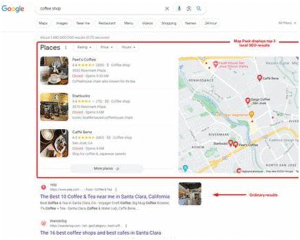
- The map / local-pack
- Organic results
- Featured snippets
- “People also searched for” suggestions
These are your primary competitors.
2.2 Include indirect / emerging competitors
Don’t just track the obvious ones. Sometimes adjacent categories or new entrants show up and steal share. For example: a mobile repair van might outrank a fixed‐location repair shop because of closer proximity. According to one writeup:
“Finding your online competitors comes down to putting yourself in your customers’ shoes. Go through the customer journey on Google and note down which online competitors you come across.”
2.3 Select a manageable competitor set
For local intelligence, you don’t need dozens of rivals. Focus on 3-5 who consistently outrank you or who appear in the top positions. Using too many dilutes your focus.
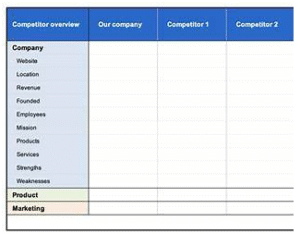
2.4 Create a competitor tracker sheet
Set up a spreadsheet (or use a tool) with columns like: Competitor Name | Address | Phone | Categories | Review Count | Avg Rating | Priority (High/Med/Low) | Notes. This becomes your base for monitoring.
- Key Metrics & Data Points to Monitor
Once you’ve identified your competitors, you’ll want to systematically track specific metrics. Here are the essential ones for a Google Business Profile intelligence play-book:
3.1 Profile completeness & categories
- Are all relevant service-categories listed?
- Is the business using every applicable attribute (e.g., “Online appointments”, “On-site services” etc.)?
- Are business hours, address, phone, website links up-to-date?
Competitor profiles often reveal unscrutinized categories or services you can adopt.
3.2 Review metrics
- Total number of reviews
- Average star rating
- Review growth rate (e.g., +X reviews/month)
- Distribution of star ratings (1-5)
- Response rate: Are they replying to reviews? Timely responses show engagement.
Review metrics matter because they contribute to ranking and consumer trust. As one service writes: “Review Quality & Quantity Assessment … analyze competitors’ reviews … then provide actionable recommendations to help you outrank and outperform your competitors.”
3.3 Posts / Updates / Engagement
- How frequently do competitors post to their profile (e.g., weekly, bi-weekly, rarely)?
- What types of posts: offers, events, photos, updates?
- Are the posts generating visible user engagement (views, clicks)?
Regular posting signals freshness and engagement — an advantage for you to track and match or exceed.
3.4 Photos / Visual content
- Number of profile photos
- Quality of photos (resolution, diversity: location, staff, service in-action)
- Are they using videos?
- Are they geotagged/keyword-optimized (if applicable)?
Visuals matter for local search and user click-through.
3.5 Keywords & Services listed
- What services are listed (text) in their profile? Are keywords embedded?
- Are they targeting niche services you do not yet list?
- What service names do they use (e.g., “24-hour emergency plumber” vs “emergency plumbing service”)
According to one article: “Analyze keywords … competitor listings … identify high-value, low-competition keywords that your business isn’t currently ranking for …”
3.6 Proximity / Location Influence
In local SEO, distance is a key factor. Monitor how far your competitor is from key ZIPs/service areas. Sometimes being slightly closer to the searcher gives the ranking edge. While you cannot change your address, you can optimize for service area, additional locations, or geo-targeted content.
3.7 Backlinks / Citation / Off-page signals
Though the focus here is on the Business Profile, off-page factors still matter (e.g., local citations, backlinks to the website, local authority). Use tools to check domain strength/citations for competitor websites.
3.8 Historical ranking & changes
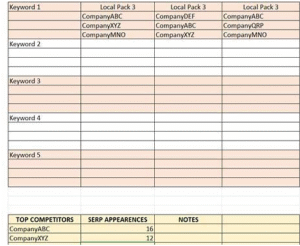
- Track monthly where each competitor appears in your service area’s search results for key keywords.
- Monitor when they make changes (new review spike, new category, updated photo gallery) and correlate to ranking movement.
According to one local SEO audit guide: “You can’t see everything by performing a normal search… a keyword-tabbed view shows you the top ten competitors for that keyword” BrightLocal

- Tools & Workflows for Ongoing Monitoring
To make competitor intelligence repeatable and manageable, you’ll want tools + workflows.
4.1 Tools you can use
- Manual spreadsheets (Excel/Google Sheets) with scheduled updates.
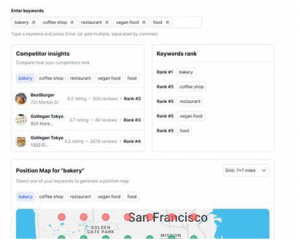
- Third-party local SEO platforms that support competitor tracking for Business Profiles (e.g., tools referenced in the articles above). For example, one tool claims:
“Achieve access to … competitor keywords, locations, distance, SEO search ranking position of each competitor.”
- Alerts: Use Google Alerts (free) to monitor competitors’ name, services, location expansions, review mentions. According to a guide:
“Google Alerts is the Swiss Army knife of competitive intelligence … 72% of startups use Google Alerts for competitor monitoring … only 9% extract strategic value from it.”
- SERP tracking tools: For local keyword ranking in your area (e.g., mobile vs desktop in Detroit).
- Review monitoring tools: Monitor review volume, sentiment, response speed for you and competitors.
- Visual content auditing tools: See photo counts and quality.
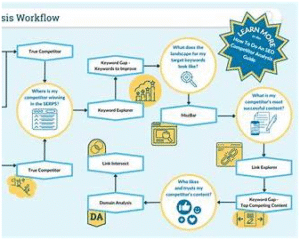
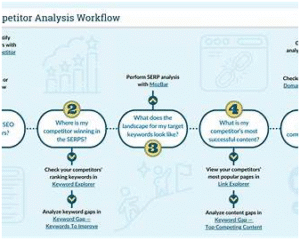
4.2 Workflow: Monthly Competitor Intelligence Snapshot
Here’s a suggested workflow (you can adapt to weekly/quarterly depending on scale):
Step 1: Data collection (Day 1–3)
- Update your competitor tracking sheet with the latest review counts, average rating, distance from key ZIP codes, categories listed, photo count, post frequency.
- Run keyword ranking checks for your target keywords; identify where each competitor ranks for each keyword.
- Run site/citation/backlink check for each competitor’s website (for the off-profile signal).
Step 2: Benchmarking & gap analysis (Day 4–5)
- Compare your key metrics to the top competitor(s). For example:
- If competitor has 320 reviews and you have 120, you know review growth is a priority.
- If competitor posts 4 offers/month and you post zero, you have an obvious content gap.
- Identify 2-3 areas where you are weakest relative to top competitor.
Step 3: Strategic action plan (Day 6–7)
- Translate gaps into tasks. Example: “Add missing service categories”, “Launch weekly offer posts”, “Increase photo count by X per month”.
- Assign to owner and set due date.
- Track progress in a project management system (Trello/Asana) with “Competitor Intelligence” tag.
Step 4: Monitor impact & iterate (Ongoing)
- Each month check if changes correlate to ranking improvement (both your ranking and competitive shifts).
- Celebrate wins and recalibrate tasks.
4.3 Example flowchart
- Translating Insights into Action: Optimization Strategies
Now the fun part: once you have competitor intelligence, how do you use it? Here are specific strategic recommendations tied to each data set.
5.1 Review Growth Strategy
Insight: A competitor has 400 reviews vs your 150.
Action:
- Launch a review-generation campaign (in-store prompts, email post-service, SMS request).
- Respond to every review (positive or negative) within 24-48 hours to signal responsiveness.
- Ask customers to mention a service (so review text includes keywords like “emergency plumbing Detroit”).
- Monitor monthly review count growth and average rating.
5.2 Category & Service List Optimization
Insight: Competitor lists niche service “24/7 emergency HVAC repair” while you list only “HVAC repair”.
Action:
- Audit your “Services” section on your Google Business Profile and add missing niche/long-tail services (provided you offer them).
- Ensure descriptions include location + service keywords (e.g., “Detroit same-day HVAC emergency service”).
5.3 Posting / Content Freshness
Insight: Competitor posts weekly offers (“10% off new customers”), you haven’t posted in 3 months.
Action:
- Commit to a posting schedule (e.g., every Wednesday).
- Alternate types: Offer posts, event posts, new-service announcements, local community involvement.
- Include keyword-rich captions, photos, call-to-action links.
- Track engagement (clicks, photo views) and adjust offers based on what performs.
5.4 Photo / Video Strategy
Insight: Competitor has 100+ high-quality photos including “before/after”, “team in action”, “local landmark”. Your profile has only 20 generic photos.
Action:
- Plan a photo shoot: location exterior, staff team, service in action, happy customer, equipment.
- Add short videos (10-15 seconds) if possible.
- Geotag or ensure location metadata shows Detroit (if possible).
- Upload regularly (e.g., 10 photos/month) until you’re at or above competitor’s volume.
5.5 Keyword & Schema Focus
Insight: Competitor shows up for keyword “same-day plumbing Detroit” though your main keyword is “plumbing Detroit”.
Action:
- Incorporate that phrase into: business description, services list, posts, review prompts.
- Create landing pages on your website targeting that phrase and link it in your profile.
- Use schema markup on your website for LocalBusiness with those service keywords.
5.6 Proximity / Service-Area Tactics
Insight: A competitor has a second location just a few miles away from you and appears in ZIPs you target.
Action:
- If feasible, establish a satellite location or service-area address (fire-up a Google Business Profile for that location).
- Expand your service-area polygon to include underserved ZIPs.
- Use local content (blogs/posts) referencing the ZIPs you want to outrank.
5.7 Off-Profile & Citation Strength
Insight: Competitor has strong local citations (industry directories, local chamber sites) linking to their website or profile.
Action:
- Perform a citation audit for your business (NAP consistency).
- Build 5–10 new relevant local citations this quarter (industry directories, local commerce orgs).
- Encourage local bloggers/news outlets to mention you (and your Business Profile) in articles.
5.8 Track Changes & Adapt
Insight: Competitor spikes review growth after launching a social-media campaign.
Action:
- Monitor competitor changes (via your alerts/trackers).
- If they change a tactic, test a variant of it. For example: competitor ran a “refer a friend” review drive; you could run “first service free” + “leave review for $20 gift card”.
- Case Study (Illustrative)
Let’s walk through a hypothetical case to make this real.
Scenario
You operate a local auto-repair shop in Detroit called “Detroit Auto Pro”. Your top competitor “MotorFix Detroit” occupies the top map-pack position for keywords like “auto repair Detroit”, “brake service Detroit 48226”.
Initial competitor intelligence snapshot:
| Metric | MotorFix Detroit | Detroit Auto Pro (You) |
| Reviews | 412 | 128 |
| Avg rating | 4.8 | 4.3 |
| Photo count | 95 | 32 |
| Service categories listed | 15 | 9 |
| Post frequency (last 30d) | 4 | 0 |
| Keywords targeted | “Brake replacement Detroit”, “Same-day auto repair Detroit” | “Auto repair Detroit”, “Engine diagnostics Detroit” |
Gap Analysis
- Review count: competitor ~3× your reviews.
- Posting: competitor active, you are inactive.
- Photo count: competitor ~3× your photos.
- Service categories: competitor includes niche services you don’t list.
- Keywords: competitor uses “same-day” long-tail; you do not.
Action Plan – 90-day sprint
- Launch review campaign: ask all customers after service to leave a review including the service they received. Target +100 reviews in 90 days.
- Schedule weekly posts: every Wednesday – rotate offers (e.g., “10% off brake service”), behind-the-scenes photos, customer testimonials.
- Photo upgrade: Organize a photo-day at your shop; add 50 new photos (team, facility, happy customers, service in action).
- Service list revision: Add niche services such as “same-day brake replacement Detroit”, “fleet vehicle service Detroit”.
- Keyword update: Update business description to include “Detroit same-day auto repair” etc, create a landing page on your website for “same-day auto repair Detroit” and link it from your profile.
- Citation boost: Submit your business to 10 local auto-repair directories; ensure NAP consistency.
- Monthly tracking: On the 1st of each month, record competitor and your metrics; check whether your ranking for target keywords in Detroit ZIPs improves.
Expected outcomes
- Within three months, your review count should close the gap and you may appear alongside or above MotorFix in map-pack for “same-day auto repair Detroit”.
- Increased photo count and posts signal to Google freshness and engagement, which may boost local ranking.
- The targeted keyword landing page can help you win the long-tail “same-day” queries.
- A stronger citation base improves overall local authority.
You can adapt this case to your specific vertical.

- Common Pitfalls & How to Avoid Them
When doing competitor intelligence for a Google Business Profile, many businesses stumble. Here are key pitfalls + remedies:
- Pitfall: Treating it as a one-time audit
Remedy: Make it a recurring process (monthly or quarterly) so you capture shifts and adapt. - Pitfall: Focusing only on your profile
Remedy: Always benchmark against competitors — you need context. - Pitfall: Chasing every competitor metric equally
Remedy: Prioritize based on impact. For example, reviews often move the needle more than photo count. Focus your resources accordingly. - Pitfall: Blind copying competitor tactics without context
Remedy: Just because your competitor posts 8 offers/month doesn’t guarantee you’ll succeed by doing the same. Test, measure, iterate. - Pitfall: Ignoring off-profile signals
Remedy: Don’t neglect citations, website content, backlinks — they support your profile’s local ranking. - Pitfall: Data but no action
Remedy: Insights are only valuable if translated into action (see Section 5). Use your tracker to assign tasks and deadlines.
- Measuring Success: KPIs & Dashboard
To evaluate whether your competitor-intelligence strategy is paying off, track these KPIs:
- Review count growth (vs competitor)
- Average rating trend
- Number of posts published per month
- Photo count increase
- Ranking position for target keywords (map-pack and local organic)
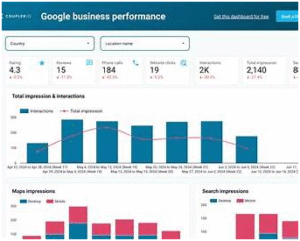
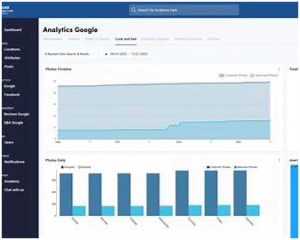
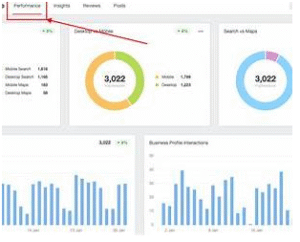
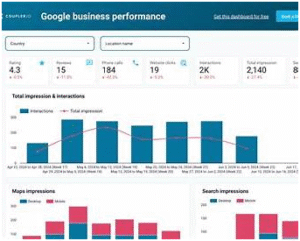
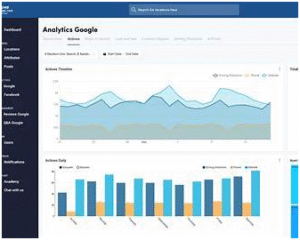
- Click-throughs/calls/requests from your Google Business Profile (tracked via Google My Business Insights)
- Service pages visits tied from your profile
- Engagement metrics (photo views, post views)
- Distance/position changes: whether your business appears for searchers slightly further away
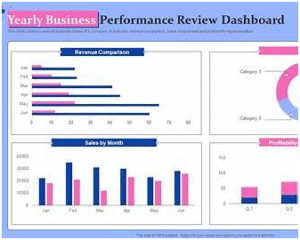
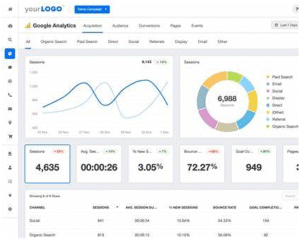
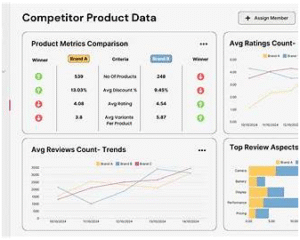
Set up a simple dashboard (Google Data Studio, or Excel) with trend lines for each metric. Compare your performance versus your top 3 competitors. Visualizing these trends helps you spot when you’re gaining share.
- Strategic Recommendations for the Next 6-12 Months
Considering the dynamic nature of local SEO and Google’s continuous updates, here are strategic recommendations you should integrate into your roadmap:
9.1 Niche differentiation
Use competitor intelligence to find service-niches your rivals are weak in. For example: if no competitor emphasizes “eco-friendly HVAC repair Detroit”, you can build content and profile posts around it.
9.2 Local community & brand partnerships
Your competitor may dominate reviews, but you can win brand perception locally: sponsor community events, partner with local charities, run local offers — then post about them in your profile. These activities create unique signals your rivals may not replicate.
9.3 Multi-location expansion
If applicable: monitor where competitors are opening new locations or service areas. You might replicate or pre-emptively expand into ZIPs where they are thin.
9.4 Automation & alerts
Set up automated alerts (via Google Alerts or other tools) to notify you when competitors get review spikes, launch new services, or get mentioned in the press. This gives you a head-start. (See the guide on Google Alerts for competitor tracking) RivalSense
9.5 Content + website synergy
Your Google Business Profile listing should not be isolated. Use competitor insights to inform website content strategy (landing pages, blog posts) that link back to your profile. For example, if competitor lists “fleet vehicle service Detroit”, you can create a blog post “Fleet vehicle service in Detroit – why local businesses trust us” and connect it.
9.6 Review sentiment mining
Go beyond review counts: analyze what competitors’ reviewers say. For example: “Their tech was late” or “quick response” — you can turn that into marketing copy (“We guarantee on-time service”) and ask customers to reference it.
9.7 Adjust for Google algorithm/local changes
Local search is evolving (mobile-first, voice search, “near me tonight” queries). Use your competitor tracker to notice shifts (e.g., a competitor suddenly ranking for “mobile brake repair Detroit 24 hours”) and adapt your service offering and listing accordingly.
- Final Thoughts
Mastering the use of competitor intelligence for your Google Business Profile is what separates brands that just show up locally from those that dominate the local pack. The steps outlined here give you a systemic way to: identify who you’re competing against, track their key signals, analyze the gaps, convert insights into action, and monitor your progress.
If you…
- regularly benchmark your local rivals,
- take aggressive and consistent action on gaps, and
- integrate your Business Profile optimization with website/content strategy
… then you’re well-positioned to outrank those local rivals.
Remember: local search is not one-and-done. It’s ongoing. Competitors will react. Google will update. Your job is to stay ahead through intelligence, action, and refinement.